How testosterone declines with age



As you get older, your body changes, and your testosterone levels are no exception. Testosterone declines in men gradually with age, starting at around 40 years old and at a rate of approximately 1% to 2% per year.
This process is sometimes called andropause, or “male menopause,” and can bring about physical and emotional changes that can significantly and negatively affect your mood, energy, libido, muscle mass, and more.1
Let’s dive into how testosterone declines with age, so you have an idea of what to expect and how to better manage your testosterone levels as you get older.
Key takeaways
- Testosterone naturally declines with age, due to testicular function decline and fewer signals from the part of your brain responsible for testosterone production.
- Clinically low testosterone is diagnosed based on lab results along with bothersome symptoms. “Normal” levels of testosterone decline with age, as well.
- Estimates for the global prevalence of low testosterone ranges from 10% to 40%. Studies show that, compared to decades ago, average testosterone levels have fallen, even among young men who are not experiencing age-related testosterone decline.
Normal testosterone levels by age
Testosterone is typically measured by a blood test, and normal reference ranges are based on a metric called “total testosterone.” This is expressed as nanograms (ng) of testosterone per deciliter (dL) of blood.
According to the American Urological Association, clinicians use a total testosterone
level below 300 ng/dL as “a reasonable cut-off in support of the diagnosis of low testosterone.”2 However, average testosterone levels decrease with age, and individual levels can vary widely.
While levels of testosterone in the blood decline wit age, low testosterone is typically not diagnosed based on a single blood test. The AUA recommends a diagnostic criteria of at least two testosterone tests and one or more bothersome symptoms connected to the low testosterone levels.2
Why testosterone declines with age
Testosterone naturally declines with age for a few reasons.
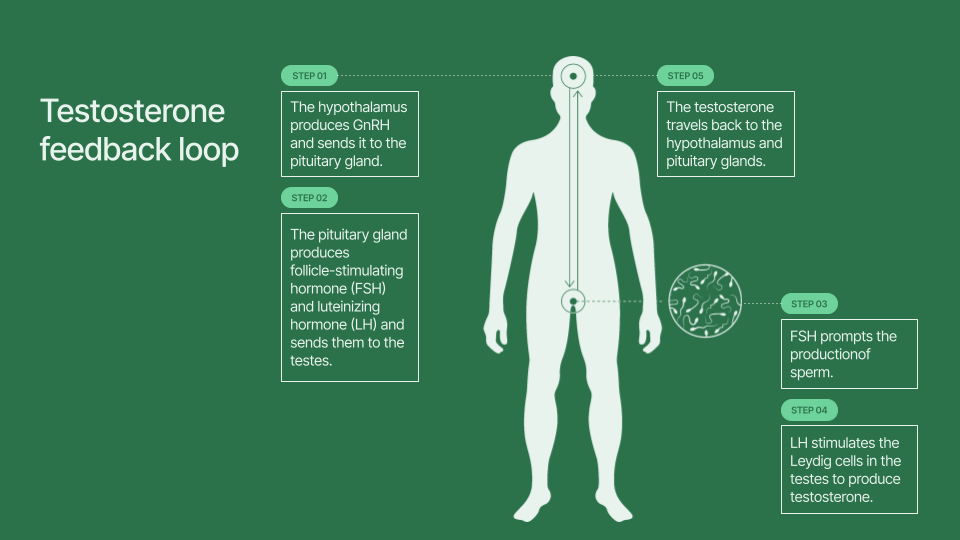
- Reduced GnRH secretion: The process of producing testosterone actually starts in the hypothalamus, a gland in the brain that secretes a hormone called “gonadatropin-releasing hormone” or GnRH. This hormone then travels to the pituitary gland, where it signals the pituitary to produce luteinizing hormone (LH). LH, in turn, triggers the Leydig cells in the testicles to produce testosterone. As you age, your hypothalamus produces less GnRH, resulting in lower LH and testosterone levels.
- Reduced testicular function: As you age, the Leydig cells in your testes don’t function as well or respond as strongly to LH stimulation, resulting in lower testosterone production. There may also be age-related changes to your testicle itself, such as reduced blood flow, that affects the Leydig cells and testosterone production.
Other lifestyle factors that can contribute to an earlier or faster decline in testosterone levels:
- obesity
- poor diet
- chronic diseases (ex: diabetes, kidney disease)
- high chronic stress (cortisol)
- smoking
- lack of physical activity
- too much exercise
- certain medications
- exposure to endocrine-disrupting chemicals
- low thyroid function
- alcohol/drug abuse
- sleep apnea
- testicular injury
- cancer treatments
- genetic conditions (ex: Klinefelter syndrome, Kallmann syndrome)
While a decline in testosterone is natural as you get older, studies show testosterone levels are falling among young men as a whole as well. A 2021 study found that over a 17 year period —
from 1999 to 2016 — average testosterone levels were lower during the later years (2011-2016) compared to the earlier ones (1999-2000).4 The global prevalence of low testosterone ranges from 10% to 40%.5
Increased levels of obesity since 1999 have played a role in lower testosterone levels overall, but the researchers also noted that this downward trend remained significant even among men with normal BMI, signaling the effect of other lifestyle factors. The research suggested one of these factors may be more widespread exposure to endocrine-disrupting chemicals such as microplastics and pesticides.
Preserve the option to be a dad after TRT.
How does low testosterone impact fertility?
Not all men with low testosterone experience infertility. Because testosterone is produced in the testes — alongside sperm — levels of T inside the testicle are typically significantly higher than what shows up in bloodwork. For that reason, sperm production does not require a high total testosterone level, and most men with low testosterone will still be able to make sperm.
But if you’re trying to conceive with low testosterone, you may experience other obstacles. Low testosterone symptoms such as erectile dysfunction and decreased libidio can complicate your chances of conception.
Other symptoms of low testosterone include:
- fatigue
- weight gain
- osteoporosis
- mood disorders (anxiety, depression, etc.)
- loss of body hair or muscle mass
If you have concerns regarding your fertility and/or sperm health, the best thing to do is to order a semen testing kit to get the answers you need.
When is low testosterone a medical issue?
Low testosterone or hypogonadism is considered a medical issue when your levels are consistently below 300 ng/dL and accompanied by persistent low testosterone symptoms.
Diagnosis typically involves two simple blood tests between 8am and 10am, as your testosterone levels are at their highest in the morning.
Your doctor will likely check your hemoglobin, hematocrit, luteinizing hormone, prostate-specific antigen, and prolactin levels too, as secondary tests that might help them determine the cause of your low testosterone.6
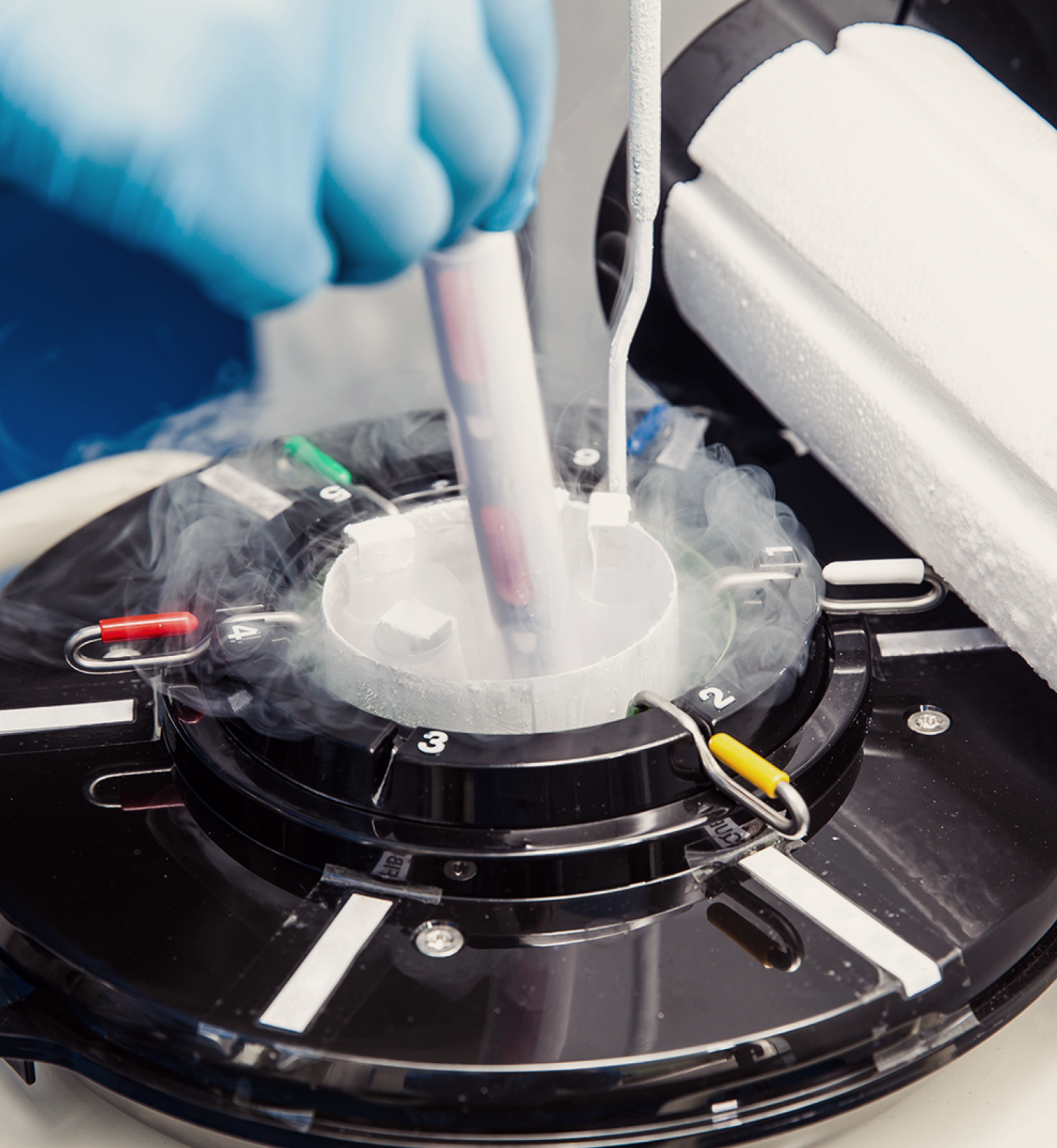
If you’re on or about to take testosterone replacement therapy (TRT) to treat your low testosterone, you should know that the treatment can significantly impair sperm production. Your brain will register your natural testosterone levels as adequate and send fewer signals to your testes altogether, leading you to produce even less sperm. Before starting TRT, it’s important to let your healthcare provider know whether you wish to conceive in the foreseeable future, and consider freezing your sperm before TRT.
How to maintain a healthy testosterone level as you age
As you get older, maintaining healthy testosterone levels and reducing the symptoms of low T requires consistent lifestyle strategies. The following habits have been associated with higher testosterone levels with age:
- Sleeping deeply for 7–9 hours every night
- Regular strength training and high intensity interval training
- Nutritious and balanced eating (fruits, vegetables, healthy fats, and proteins)
- Managing your stress
- Maintaining a healthy weight
- Reducing or avoiding alcohol
- Avoiding smoking nicotine or cannabis
- Avoiding products that contain bisphenol A (BPA) and other endocrine-disrupting chemicals
If you believe you’re experiencing the impacts of low testosterone with aging, you may consider making some lifestyle changes as a first step. It may be possible to improve your low testosterone levels without medication.
Learn more about increasing your testosterone naturally.
Frequently asked questions
- Does testosterone decline with age? Yes, testosterone will naturally decline in men with age, dropping about 1–2% per year after age 40.
- What age does testosterone start to drop? Starting at around 40 years old, testosterone levels start to drop, and gradually decline each year.
- How fast does testosterone decline? Most men don’t see a significant loss of testosterone levels until they’re 40. After 40, testosterone will typically decline approximately 1–2% per year of age.
- Can men with low testosterone still be fertile? Men with low testosterone can still be fertile, as sperm production does not require high total testosterone levels. These men may experience other challenges, such as low libido, that make it more difficult to conceive.
- Can low testosterone be reversed naturally? For some men, low testosterone can be reversed naturally with targeted lifestyle changes and without medications.
References
- Cheng et al. “Age-related testosterone decline: mechanisms and intervention strategies.” Reproductive biology and endocrinology, 2024.
- Mulhall et al. “Evaluation and management of testosterone deficiency: AUA guideline.” J Urol, 2018.
- Barrett-Conor. “Male Testosterone: What is normal?” Clinical Endocrinology, 2005.
- Lokeshwar et al. “Decline in Serum Testosterone Levels Among Adolescent and Young Adult Men in the USA.” European Urology, 2021.
- Anaissie et al. “Testosterone deficiency in adults and corresponding treatment patterns across the globe.” Translational andrology and urology, 2017.
- Rivas et al. “Diagnosing and managing low serum testosterone.” Proceedings (Baylor University. Medical Center), 2014.
TRT shuts off your ability to make sperm. Store your healthiest sperm from home, today.

Learn how to protect your fertility before TRT
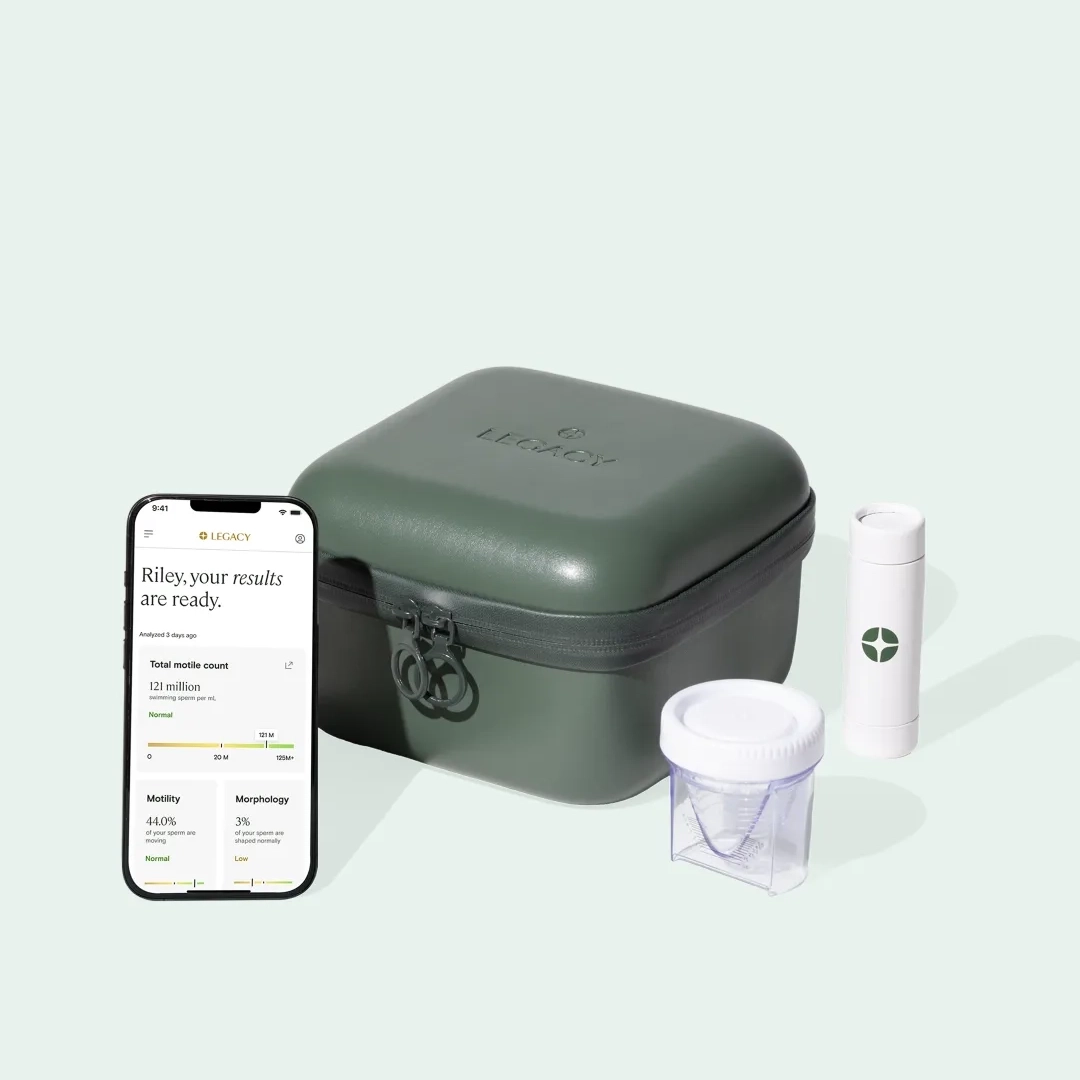
Standard Semen Analysis
$295
Key features

Semen volume
Sperm concentration & count
Motility
Morphology