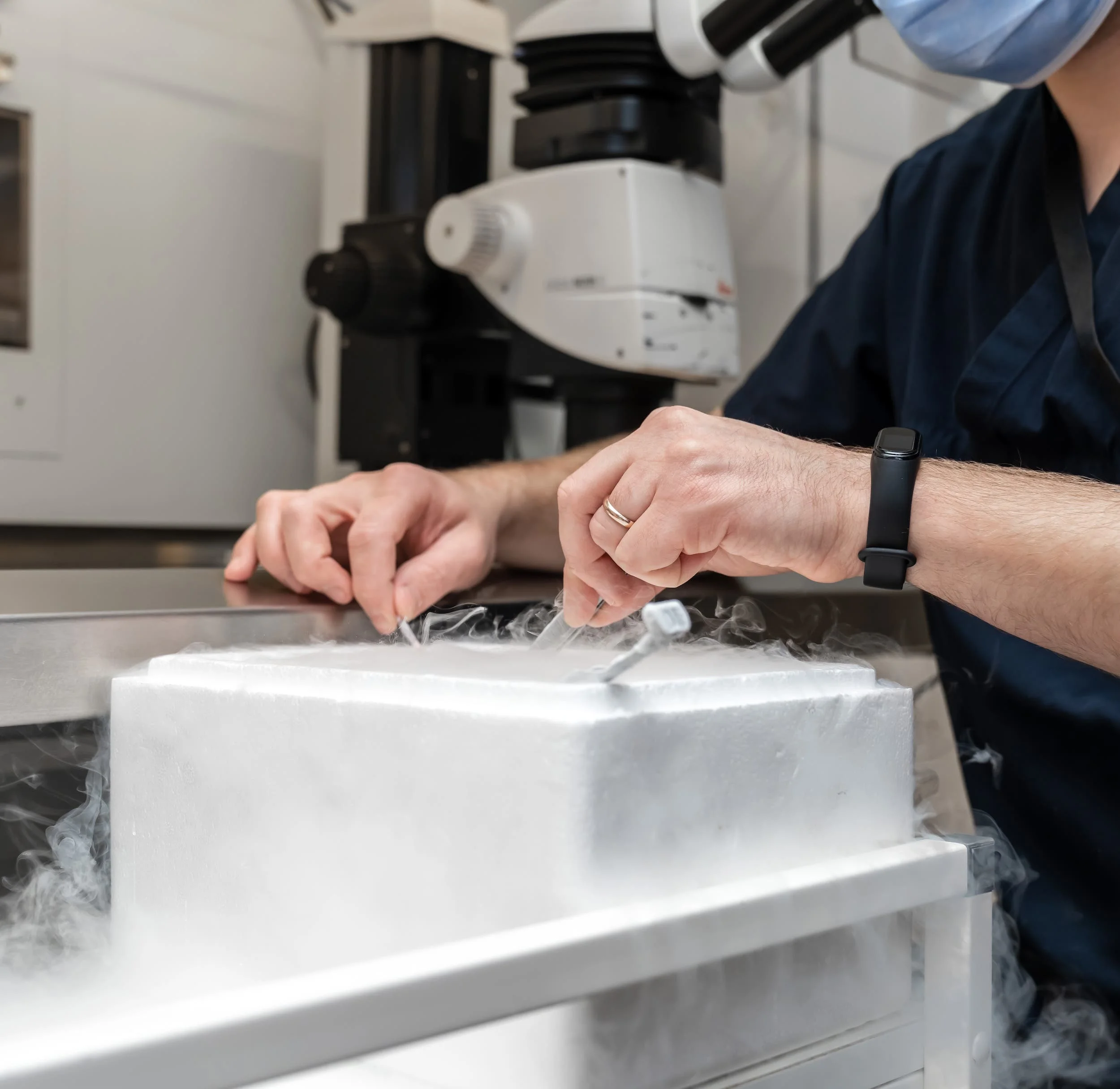
How to use your frozen sperm with Legacy



This article will take you through the steps of how to withdraw your sperm with Legacy, the cost of sperm withdrawal, and what options you have for using your frozen sperm.
Deciding to use your frozen sperm shouldn’t be a hassle or create unnecessary stress. If you freeze sperm with Legacy, it’s easy and straightforward to withdraw your sperm from storage so you can try to start a family on your own terms and timeline.
Once you’ve coordinated with your doctor or fertility clinic to set up the insemination or IVF procedure, you can simply request a vial withdrawal from your client dashboard to get the process started. The entire withdrawal process has been designed with your convenience in mind, ensuring that accessing your preserved sperm samples is as seamless as the initial sperm freezing process was.
This comprehensive article will take you through all the essential steps of how to use your frozen sperm with Legacy, provide detailed information about the cost of sperm withdrawal, and explain the options you have for using your frozen sperm (plus associated IUI vs. IVF success rates) to achieve your family-building goals.
Key takeaways
- Legacy clients can request to withdraw one or more frozen sperm vials directly from their client dashboard. Sperm is delivered in about 2 weeks for domestic transfers or 3–4 weeks internationally. The cost of withdrawal depends on where you’re shipping your frozen sperm.
- There are three primary ways to use your frozen sperm: intrauterine insemination (IUI), in vitro fertilization (IVF), and IVF with intracytoplasmic sperm injection (ICSI). Your doctor can help you understand IUI success rates and IVF success rates to determine which approach is best for your situation.
- One semen sample provided to Legacy will be frozen in four separate vials for maximum flexibility. One vial is typically needed per IUI/IVF attempt, but your doctor may recommend withdrawing multiple vials depending on your treatment plan and sperm freezing success rates.
How to withdraw your frozen sperm with Legacy
A quick step-by-step:
- Discuss timing and how many vials you’ll need to withdraw with the doctor who is managing your IUI or IVF procedure. This conversation should include details about IUI vs. IVF success rates to help you make an informed decision about your treatment path.
- Start the process by requesting a vial withdrawal via your client dashboard. You’ll need to provide specific details about your doctor, clinic, and the planned procedure to ensure smooth coordination.
- We’ll coordinate the transfer directly with your doctor or clinic, handling all the logistics on your behalf. The whole process will take about 2 weeks if you’re shipping within the US, or up to a month if you’re shipping internationally, to ensure safe delivery when shipping your frozen sperm.
The longer version:
Understanding that freezing sperm is just the first step in your fertility journey, we’ve streamlined the withdrawal process to make accessing your samples as stress-free as possible.
Legacy clients can begin the withdrawal process of one or more frozen sperm vials directly from their secure client dashboard. We’ll need to know your doctor’s name and location along with a few other essential details to get the transfer started efficiently. Once you submit the request through our user-friendly system, we’ll coordinate directly with your provider to ensure everything proceeds smoothly.
Remember that it takes approximately 2 weeks for domestic transfers within the United States and 3–4 weeks for international transfers to reach their destination. It’s absolutely crucial that you carefully time your withdrawal request so that your sample will arrive in time for your planned date of insemination or IVF procedure, avoiding any delays in your treatment schedule.
If you’re concerned about timing or want to have your samples readily available, you might want to explore short-term storage options directly at your doctor’s office or fertility clinic. Many clinic facilities offer temporary storage solutions that can provide additional flexibility and peace of mind as you navigate your fertility treatment timeline.
Keep in mind that vials can only be sent to a licensed medical provider, not to a residential home address. This requirement ensures proper handling and storage of your precious frozen sperm samples. Coordinating with your doctor or fertility specialist is a crucial first step in the withdrawal process, as they’ll need to provide specific receiving information and confirm they’re prepared to accept the shipment.
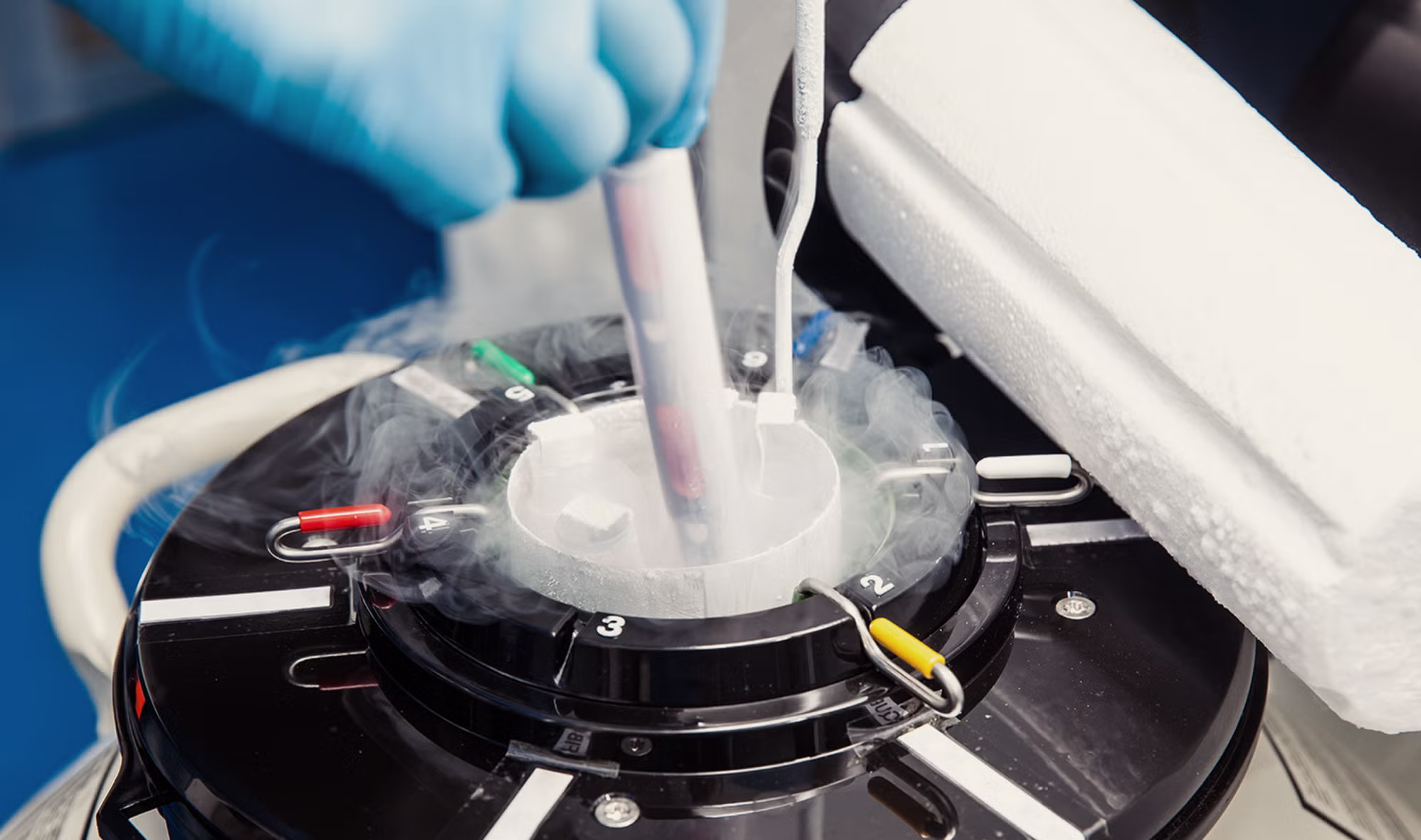
Your frozen sperm samples will be shipped from our long-term cryostorage facility to your medical provider in liquid nitrogen cryoshippers. More on the safety of shipping your frozen sperm sample below.
Once the sample is received at the medical facility, the sperm will typically be carefully thawed using established protocols and thoroughly checked to determine sperm parameters, including concentration, motility, and morphology. This quality assessment helps your medical team understand the viability of your frozen sample and plan accordingly for your procedure. Once thawed and evaluated, the sperm sample is ready to be processed and used in the assisted reproductive procedure of your choice, whether that’s IUI or IVF.
Is shipping my frozen sperm safe?
Absolutely — if all the proper protocols are followed. The process of shipping frozen sperm can’t be managed by typical shipping carriers, since frozen sperm has to stay at -196ºC or colder for the entirety of the shipping process. But with a legitimate cryogenic shipping company, there is very little risk to shipping your frozen sperm samples. Legacy partners with the industry-leading cryogenic shipping companies to manage domestic and international shipping of frozen sperm.
To ensure your sperm stays completely safe and viable throughout the entire journey, we send it using specialized cryogenic shipping tanks or “cryo shippers,” portable liquid nitrogen semen storage tanks specifically designed for transporting frozen biological samples. These sophisticated tanks maintain precise cryopreservation temperatures of -196ºC for up to 14 days — more than enough time to cover the entire shipment period, even for international transfers.
The temperature inside the tank will be monitored continuously throughout the transfer process to ensure your samples remain at optimal freezing conditions. This level of careful monitoring provides assurance that your sperm freezing investment is protected every step of the way.
Studies have consistently demonstrated that transporting frozen sperm samples using liquid nitrogen shipping tanks does not negatively affect the quality, viability, or integrity of the sample. Research confirms that sperm freezing success rates remain stable when proper transportation protocols are followed, giving you confidence that your samples will arrive in the same excellent condition as when they left our storage facility.1
How much does it cost to withdraw and ship my frozen sperm?
The cost for withdrawal depends on where you’re shipping your frozen sperm sample.
- When shipping within the United States, withdrawal typically costs $895 per transfer.
- If you’re planning to use your sperm internationally at a fertility clinic abroad, fees will be calculated based on the specific destination location and any additional shipping requirements.
- Some “legacy” Legacy clients have a frozen sperm transfer included in their original purchase. Check the agreement you signed when you froze with Legacy to learn more.
One transfer could include up to 4 vials, providing flexibility for multiple treatment attempts or procedures.
Not sure which storage plan you have or need clarification on withdrawal costs? Check your personalized client dashboard or contact our dedicated Client Services team at clientservices@givelegacy.com for more detailed information about your specific situation.
Options for using frozen sperm
There are three primary ways to use frozen sperm for family building: intrauterine insemination (IUI), in vitro fertilization (IVF), or IVF with intracytoplasmic sperm injection (ICSI). Each of these three assisted reproductive procedures has its own unique process, considerations, and success rates. Understanding IUI success rates and IUI vs. IVF success rates can help you and your doctor determine the best approach for your specific circumstances. The details of each option are explained below.
IUI with frozen sperm
During the IUI (intrauterine insemination) procedure, your carefully preserved frozen sperm is first thawed using specialized laboratory protocols and then meticulously prepared to optimize its quality and motility. The thawed and prepared sperm is then inserted directly into the uterus using a thin, flexible catheter, effectively circumventing both the vagina and cervix to bring the sperm as close as possible to the awaiting egg.
This strategic placement reduces the distance sperm must travel and increases the likelihood of successful fertilization. The IUI procedure is carefully scheduled to coincide precisely with the time of ovulation, often using ovulation-inducing medication to ensure optimal timing and maximize the chances of conception during your most fertile window.
IUI is generally considered the most appropriate first-line treatment option if your post-thaw total motile sperm count (TMSC) is more than 8 million viable, moving sperm cells. This threshold represents the minimum number of motile sperm typically needed to achieve reasonable IUI success rates.
IUI success rates
The overall success rate for IUI procedures is generally estimated at 10–30% per individual cycle, though this range can vary considerably depending on several important factors including the age of the person trying to get pregnant, overall reproductive health, the quality of the frozen sperm sample, and whether any underlying fertility issues are present.
In addition to the quality of the sperm used in IUI, maternal age is considered very influential in IUI success rates. That’s because women and people with ovaries are born with all of the eggs they’ll ever have, and the genetic quality of those eggs diminishes over time.
According to a study of over 1,000 IUI cycles published in Fertility & Sterility in 2002, the percentage of cycles that resulted in live births declines with maternal age:
- Under 25 years old: 26.7% IUI success rate
- 25–29 years old: 14.2% IUI success rate
- 30–35 years old: 12.5% IUI success rate
- 36–39 years old: 9.5% IUI success rate
- 40 years old and up: 8.5% IUI success rate
Researchers noted that, for couples with severe male-factor infertility (i.e. very low sperm count or low sperm motility), success rates may be lower and clinical recommendations on IUI vs. IVF may change.2
Importantly, research consistently shows that there is no significant difference in success rates between using fresh or frozen sperm during IUI procedures, which is excellent news for those who have invested in sperm freezing.
In a comprehensive 2022 study conducted by researchers at the prestigious Massachusetts General Hospital and Harvard Medical School, fresh and frozen sperm produced remarkably similar pregnancy outcomes across an impressive 5,335 intrauterine insemination cycles analyzed.3 The only notable difference identified in this extensive research was that time-to-pregnancy was slightly longer in the frozen sperm group compared to the fresh sperm group, though both ultimately achieved comparable sperm freezing success rates in terms of live births.
IVF with frozen sperm
During traditional in vitro fertilization (IVF), hormone medications are used to maximize the number of eggs matured in the ovaries. Once mature, the eggs are retrieved from a patient’s ovaries through a minor surgical procedure performed under sedation.
When you’re doing IVF with frozen sperm, the sperm is thawed and carefully prepared, then combined with the eggs in a controlled laboratory environment. The fertilized egg(s) are then allowed to develop and mature into blastocysts — early-stage embryos that have reached an optimal developmental stage for implantation. Within 3–6 days, these blastocysts can then either be frozen for future use or transferred directly to a uterus for pregnancy.
Can you do conventional IVF with frozen sperm? Yes, if a patient’s post-thaw motility measurements are high enough to meet clinical standards, they may have the option to proceed with standard IVF without requiring ICSI (detailed in the section below), which can be a more cost-effective approach. Clinic protocols vary, though.
IVF success rates
IVF success rates are considerably higher than IUI, averaging around 45% per cycle, though these rates can be significantly higher or lower depending primarily on the age and quality of the egg being fertilized. When comparing IUI vs IVF success rates, IVF generally offers better outcomes per cycle, though it’s also more invasive and expensive.
Like IUI, IVF success rates are predicated on both sperm and egg quality, and egg quality is significantly influenced by maternal age. According the Society for Assisted Reproductive Technology (SART)’s most recent report (in 2023), the percentage of IVF embryo transfers that result in a live birth declines with maternal age:
- Under 35 years old: 44.4% IVF success rate
- 35–37 years old: 37.4% IVF success rate
- 38–40 years old: 23.7% IVF success rate
- 41–42 years old: 14.7% IVF success rate
- 42 years old and up: 5.1% IVF success rate4
Like IUI, IVF procedures are equally as successful whether fresh or frozen sperm is used, so freezing sperm doesn’t compromise your chances of success. A 2022 study found no statistically significant difference between fertilization rates, clinical pregnancy rates, or live birth rates when using frozen sperm vs. fresh sperm in IVF.5
ICSI with frozen sperm
In some specific cases, fertility doctors may recommend ICSI (intracytoplasmic sperm injection), a specialized IVF technique in which a single carefully selected thawed sperm cell is injected directly into an individual egg using microscopic equipment. This highly precise technique can be particularly helpful to increase overall success rates when post-thaw total motile sperm count is low and doesn’t meet the thresholds for standard IVF, or when quantities of frozen sperm are limited and obtaining fresh sperm isn’t a viable option for medical or personal reasons.
ICSI success rates
For those with male-factor infertility, using ICSI can improve IVF success rates. For couples without male-factor fertility considerations, ICSI may not provide any benefits vs. conventional IVF.6
In a study examining ICSI success rates with different sperm sources, researchers found no difference between ongoing pregnancy rates or live birth rates when patients used frozen v.s fresh sperm for ICSI.7 This further confirms that sperm freezing doesn’t negatively impact fertility treatment outcomes.
Not ready to start a family right now?
How many cycles can I do with my frozen sperm?
One semen sample provided to Legacy — collected in one kit — will be separated, frozen, and preserved in four vials. These vials are strategically split and sent to different cryogenic banking locations across the country, providing redundancy and completely risk-free storage that protects your investment.
1 sample = 4 vials = 4 attempts at IUI or IVF
In general, one vial of frozen sperm is used in each individual IUI or IVF attempt, making it straightforward to calculate how many treatment cycles you can pursue with your stored samples. This means that one complete semen sample yields approximately four cycles of IUI, IVF, or IVF with ICSI, giving you multiple opportunities to achieve pregnancy with a single banking session.
While this is a good general rule of thumb, some doctors may recommend using multiple vials for certain treatment cycles, especially for those with lower-than-average total motile sperm count.
How many vials should I withdraw for my IUI or IVF cycle?
This is an important question you should discuss thoroughly with your fertility doctor when planning for your assisted reproductive procedure. The number of vials they recommend withdrawing will vary considerably depending on several key factors, including your specific post-thaw analysis report results, the particular procedure you’re planning to use (whether IUI, IVF, or ICSI), your overall treatment timeline, and whether or not there’s short-term storage available at your fertility clinic or doctor’s office to safely house the thawed vials between treatment cycles.
Once you withdraw a vial from Legacy’s long-term cryogenic storage, you can’t send it back to the facility for re-freezing. The sperm thawing process is irreversible and the sperm must be used relatively quickly after being thawed. So make absolutely sure you review this critical question with your fertility specialist prior to starting the sperm withdrawal process to avoid wasting any precious vials or compromising your sperm freezing success rates.
Have I kept my sperm in storage too long?
There is no definitive cut-off date by which you should use your frozen sperm, which is reassuring news for those who may need extended storage time before they’re ready to start a family. Extensive research consistently shows that sperm can last indefinitely when stored under the proper cryogenic conditions at extremely low temperatures, exactly as Legacy’s state-of-the-art cryogenic storage facilities provide for all client samples.
A small percentage of sperm cells will inevitably be lost during the initial freezing and subsequent thawing process, no matter how long your sperm samples are stored in cryogenic conditions. However, for most people who have millions of healthy, motile sperm per sample, this minor loss is highly unlikely to make any meaningful difference to IUI success rates, IVF success rates, or overall fertility treatment outcomes. This reassuring fact is clearly demonstrated by the remarkably similar success rates achieved for IUI, IVF, and ICSI procedures whether frozen or fresh sperm is used, with IUI vs IVF success rates following similar patterns regardless of sperm source.
Multiple comprehensive studies have scientifically confirmed that there is no measurable effect on sperm survival rate for the first five years of cryogenic storage at ultra-low temperatures.8 After five years of continuous storage, there is a small, statistically detectable decrease in sperm survival rate that does not significantly affect birth rates when the sperm is subsequently used in assisted reproductive technology (ART) procedures.
Even more remarkably, a groundbreaking report demonstrates that sperm stored for an impressive 40 years maintained its complete ability to result in successful live birth through intracytoplasmic sperm injection, proving the long-term viability of freezing sperm.9
So if you’re not ready to start a family right now, rest assured that your stored sperm will be kept completely safe and viable until you make that important life decision. And when you are finally ready to move forward with fertility treatment, withdrawing your sperm should be just as easy and straightforward as the rest of the Legacy process.
Haven’t frozen sperm yet? Get started with sperm freezing
References
- Til et al. “The effects of storing and transporting cryopreserved semen samples on dry ice,” 2016.
- Haebe et al. “Success of intrauterine insemination in women aged 40–42 years,” 2002.
- Chevrouim et al. “The impact of cryopreserved sperm on Intrauterine Insemination (IUI) outcomes: Is frozen as good as fresh?” 2022.
- Society for Assisted Reproductive Technology. “All SART Member Clinics – 2023 Retrieval and Transfer Tables,” 2023.
- Miller et al. “Outcomes of Frozen Oocyte Donor In Vitro Fertilization (IVF) Cycles Using Fresh Versus Frozen Sperm,” 2022.
- Zhu et al. “Intracytoplasmic sperm injection compared with in vitro fertilisation in patients with non-male factor infertility with low oocyte retrieval: a single-centre, retrospective cohort study,” 2024.
- Bardos et al. “COMPARISON OF ICSI WITH FRESH AND FROZEN EJACULATED SPERM IN DONOR OOCYTE RECIPIENT CYCLES UTILIZING SIBLING OOCYTES,” 2021.
- Huang et al. “Long-term cryostorage of semen in a human sperm bank does not affect clinical outcomes,” 2019.
- Szell et al. “Live births from frozen human semen stored for 40 years,” 2013.
Find what's right for you


For Tomorrow bundle
$1,495
Key features

5 years of storage (renewable)
2 collection kits for 2 samples
Pre-freeze STI test
Does not include Advanced Semen Analysis with DNA fragmentation testing