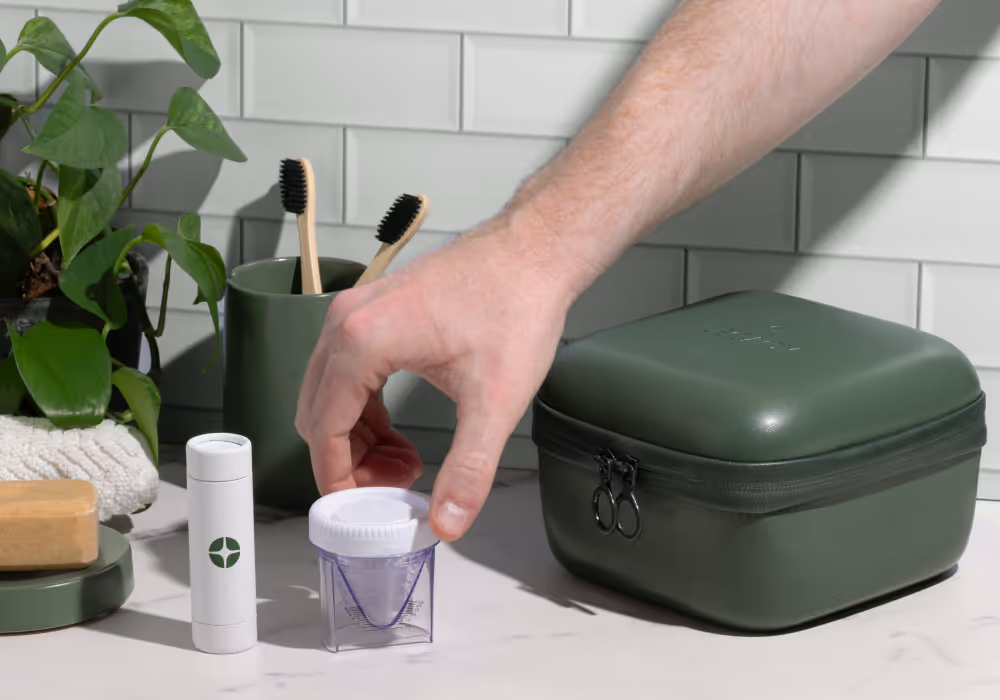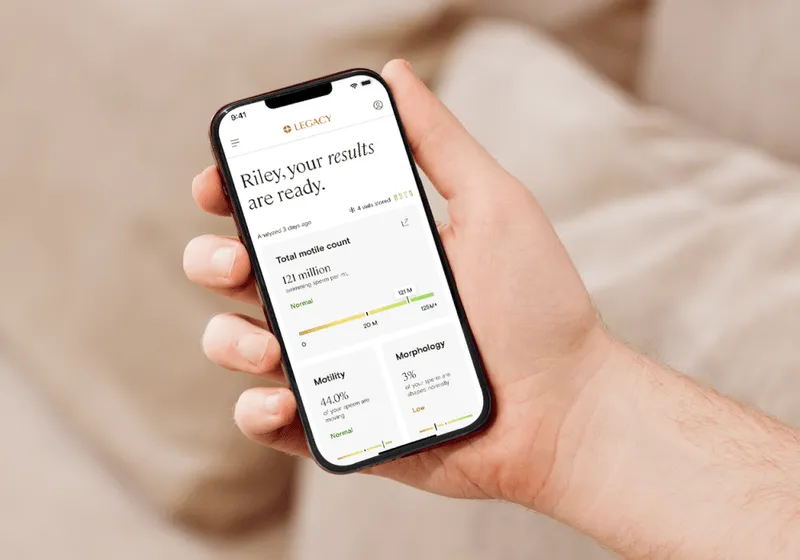

A clinic-grade analysis measuring sperm count, motility, and morphology
At a glance:
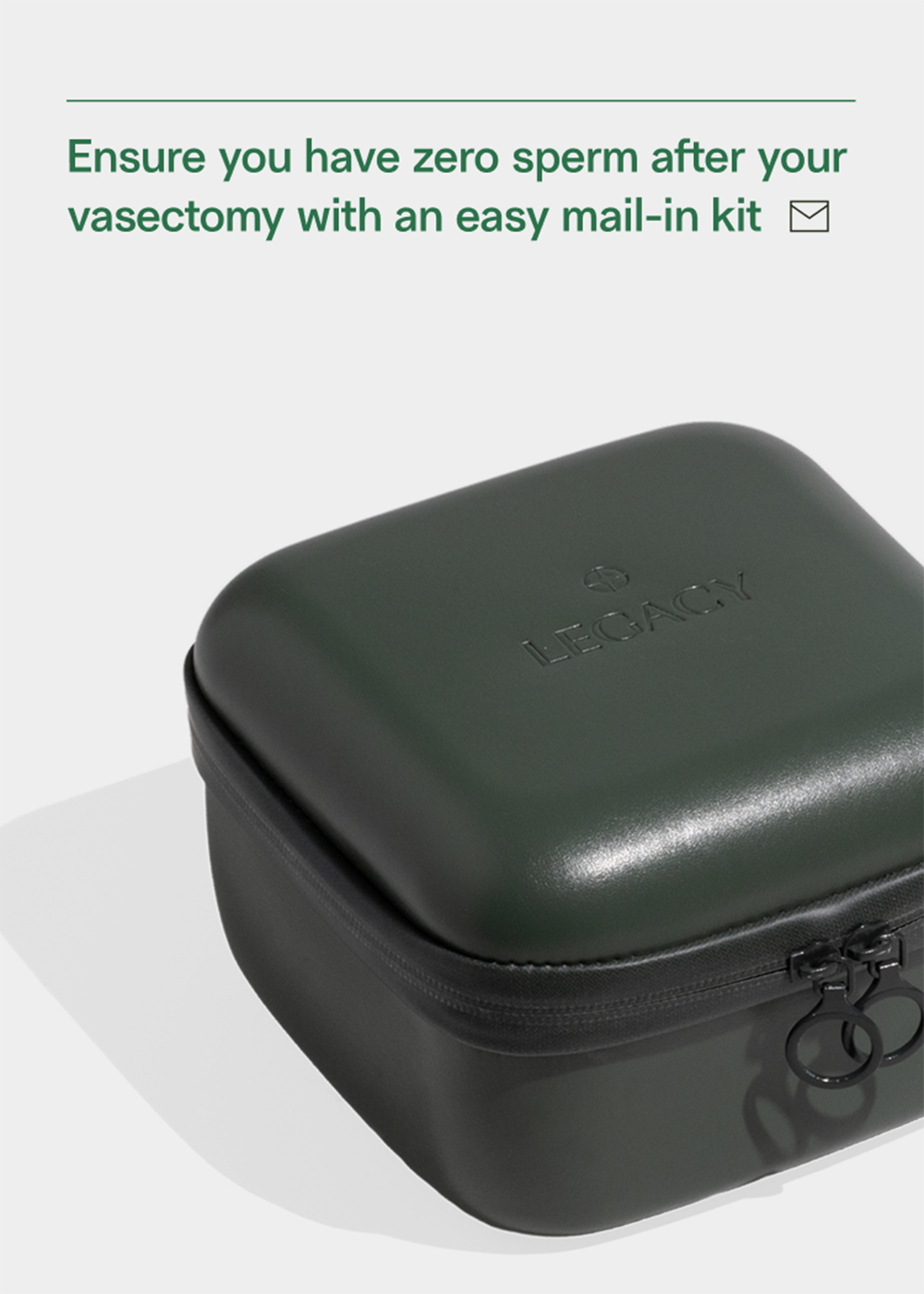
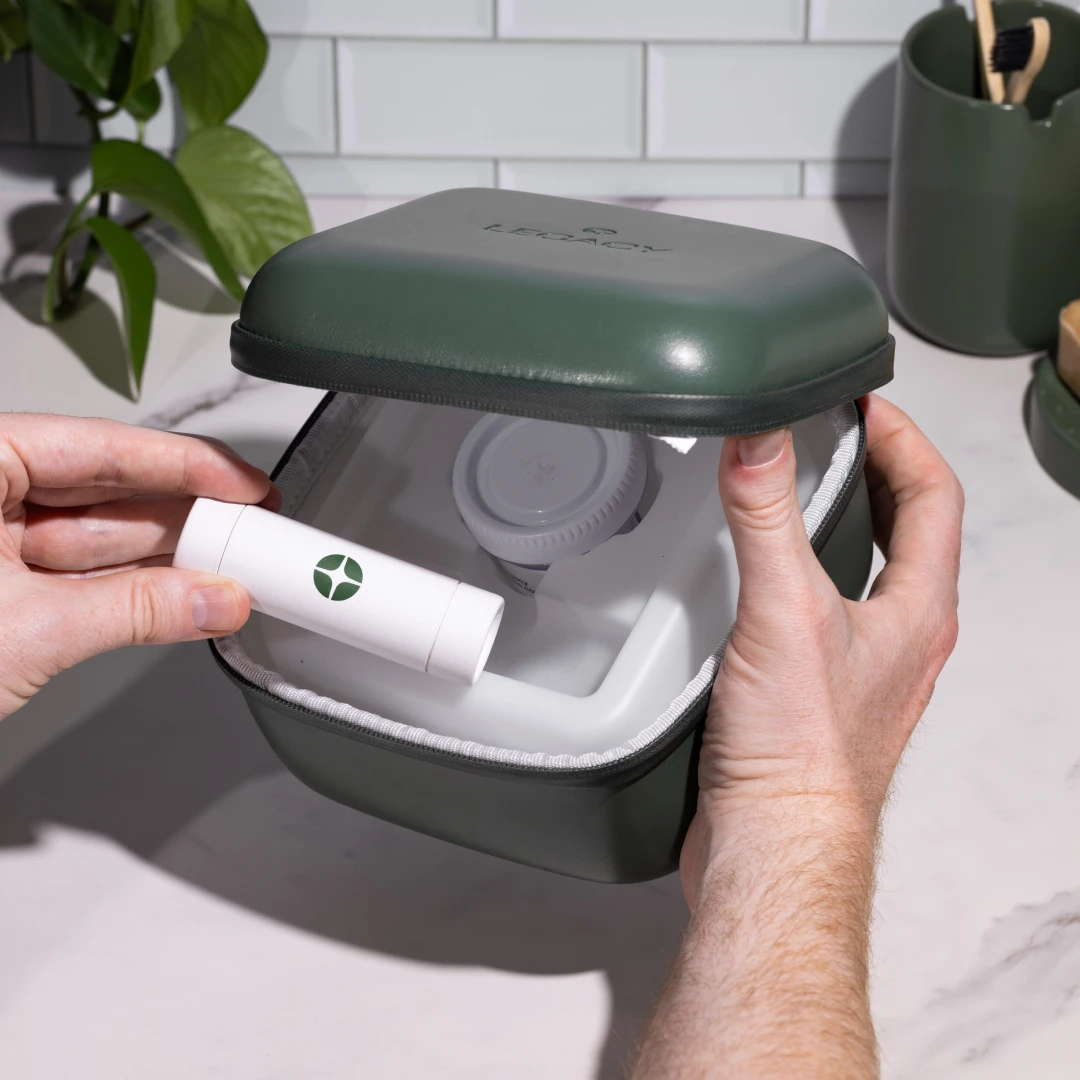
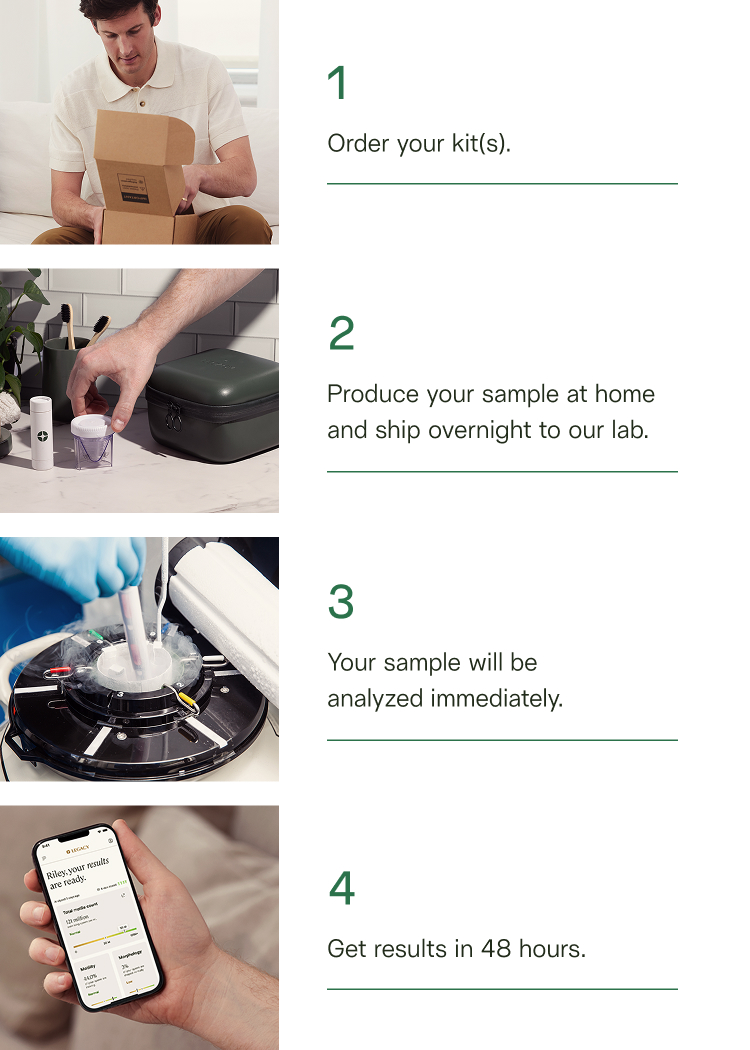
Clinically validated mail-in post-vasectomy analysis means you can test from home instead of the clinic "collection room" — it's faster, more comfortable, and no time off work required
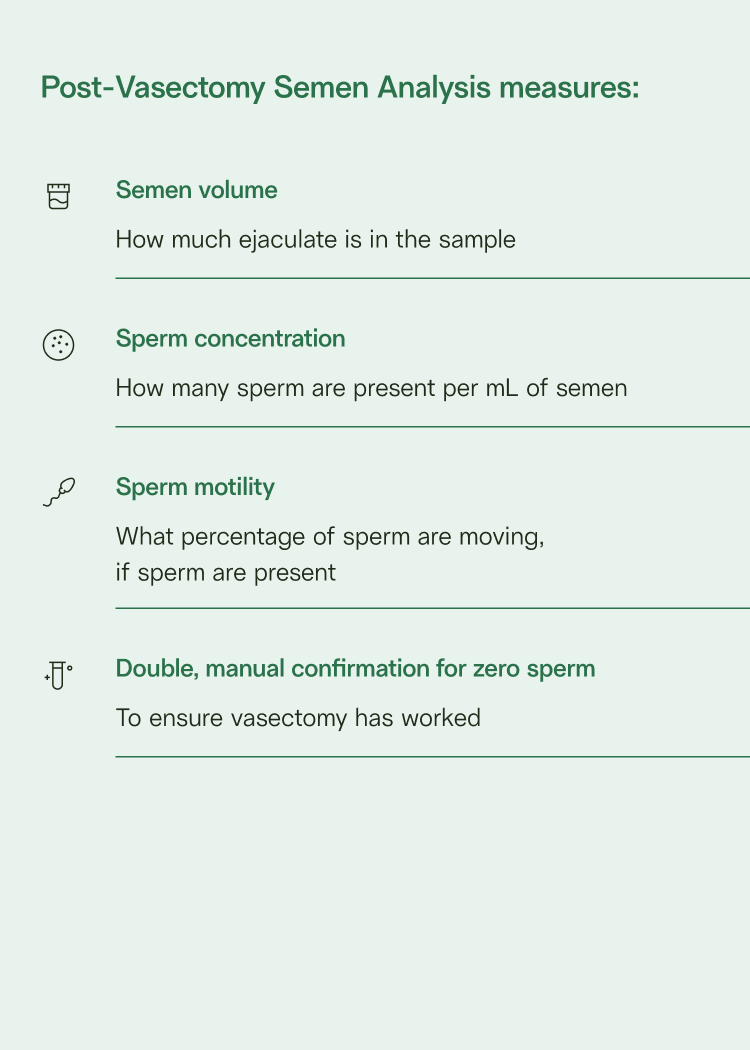
Includes double manual verification of azoospermia (zero sperm) to ensure your vasectomy has worked
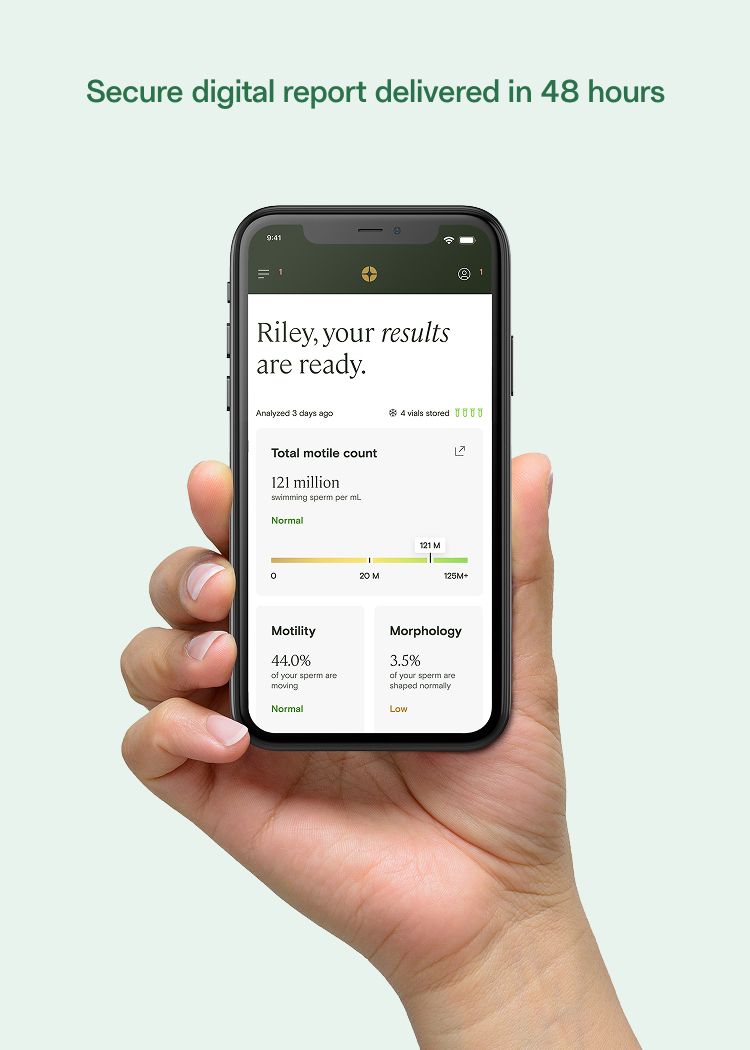
Fast & affordable while remaining scientifically reliable — results in 48 hours
HSA/FSA eligible
Yes, you should do a semen analysis to check if a vasectomy has been successful, typically 12–16 weeks after the procedure (follow your doctor's instructions). Legacy's standard semen analysis is a good option for post-vasectomy testing.
Follow your doctor’s instructions. Typically, the advice is to test your semen 8–12 weeks after your vasectomy.
You should aim to ejaculate frequently, starting one week following your procedure and stopping 2–5 days prior to your semen analysis. This will help you “clear out” the sperm from your testes. (Remember, your vasectomy isn’t considered effective until you’ve had a post-vasectomy semen analysis, so these ejaculations should be masturbation or sex with contraception.)
Clinically validated at-home post-vasectomy testing
Double, manual verification of zero sperm
Overnight sample shipping included
how much semen you produce
Volume
Semen plays a crucial role in carrying sperm through the reproductive tract. Producing the right amount means giving sperm the best chance at reaching the egg for fertilization.
How mANY sperm
Concentration
Sperm concentration is the number of sperm per milliliter of semen, as measured by a computer-assisted semen analysis device. We can use your sperm concentration and your semen volume to determine your total sperm count.
How many of your sperm are moving
Motility
Motility is the percentage of your sperm that are moving properly. In order to fertilize an egg, your sperm must be “swimming,” so motility is an important parameter for fertility.
Our report breaks down the number of sperm with progressive motility — moving forward or in large circles — vs. sperm that are swimming in tight circles, known as non-progressive motility.
Best for flexible, affordable storage

1 year of storage (renewable)
1 collection kit for 1 sample
Does not include pre-freeze STI test
Does not include Advanced Semen Analysis with DNA fragmentation testing
Best for freezing before a vasectomy for less than 3 years

5 years of storage (renewable)
2 collection kits for 2 samples
Pre-freeze STI test
Does not include Advanced Semen Analysis with DNA fragmentation testing
Best for freezing before a vasectomy for more than 3 years
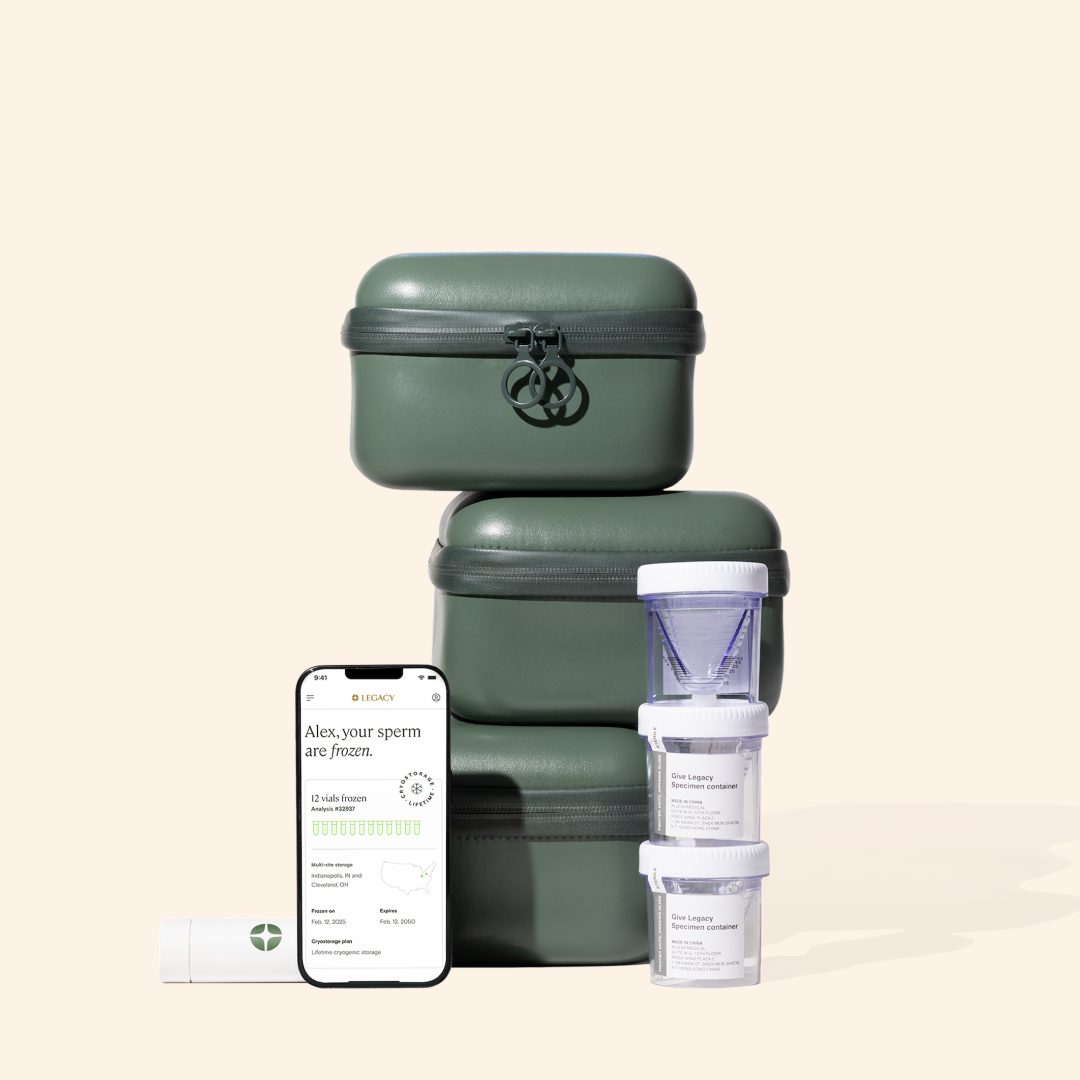
25 years of storage
3 collection kits for 3 samples
Pre-freeze STI test
Advanced Semen Analysis with DNA fragmentation testing
Not necessarily. Some sperm still remains in the semen for a short time after a vasectomy.
If you’ve already had a vasectomy, we recommend getting a standard semen analysis with an annual freezing plan as soon as possible — after you’re cleared to ejaculate, typically around 1 week post-procedure. This test will assess if there are still viable, quality sperm in your semen. If there are not, we’ll refund the cost of your storage plan.
Short answer: as many as you can afford. But the ideal number of samples to store also depends on your future plans. A few questions you might consider:
Do you have kids already? If you don’t, there may be a higher chance that you’ll want kids in the future, even if you’re sure you don’t want them right now. (Hence the vasectomy!)
How old are you? If you’re in your 20s or 30s, it’s more likely that your family plans may change in the future.
Generally speaking, one vial of sperm is used in each IUI or IVF procedure.
1 semen sample = 4 vials of frozen sperm
1 vial of frozen sperm = 1 IUI or IVF procedure
IUI pregnancy rates range from 10–25% per cycle; IVF success rates range from 5–50% per cycle. So, you may need multiple attempts to achieve pregnancy.
Probably! We want to help expedite the process. Contact us at clientservices@givelegacy.com.
A vasectomy is a highly effective permanent form of birth control. Vasectomy “failure” is defined as a case in which the vas deferens reconnect after the procedure, once again allowing sperm to enter the semen. Only about 1 or 2 in every 1,000 vasectomies fail, making it over 99% effective.
Vasectomy is a procedure in which the vas deferens, the ducts that connect the testes to the urethra in the penis, are cut. This prevents sperm from entering your semen (ejaculate or “cum”) without affecting your sexual function or hormones.
Up to 1 in 10 people who have a vasectomy will eventually seek a reversal. The truth is that you may change your mind about having (more) kids in the future. Sperm freezing is a reliable back-up plan that’s significantly more affordable and less invasive than a vasectomy reversal later on.
We recommend ordering your sperm freezing kit(s) as soon as you schedule your vasectomy. This should give you time to freeze one or multiple samples prior to your appointment.
Follow your doctor’s instructions. Typically, the advice is to test your semen 8–12 weeks after your vasectomy.
You should aim to ejaculate frequently, starting one week following your procedure and stopping 2–5 days prior to your semen analysis. This will help you “clear out” the sperm from your testes. (Remember, your vasectomy isn’t considered effective until you’ve had a post-vasectomy semen analysis, so these ejaculations should be masturbation or sex with contraception.)
Getting a vasectomy is a big (and final) decision. Although vasectomy reversal is an option should circumstances change, it is expensive and not often effective. Sperm freezing before getting a vasectomy is the best way for individuals and couples to keep their options open. Learn more about sperm freezing before vasectomy.
Yes, you should do a semen analysis to check if a vasectomy has been successful, typically 12–16 weeks after the procedure (follow your doctor's instructions). Legacy's standard semen analysis is a good option for post-vasectomy testing.
Yes. It can take 6–12 months for sperm production to resume after a reversal. For this reason, experts recommend that you test regularly for 1–2 years after the procedure to ensure sperm health is recovering. Legacy's standard semen analysis is an easy way to check whether a vasectomy reversal was effective.