Freeze sperm before your vasectomy. Test your sperm to make sure it worked.
Planning a vasectomy? Sperm testing and freezing from home lets you move forward with confidence.

In network with


You’ve got a clear plan
Vasectomy is a responsible, highly effective option that takes the birth control pressure off your partner. If you’re planning a vasectomy, pat yourself on the back — but make sure you have a back-up plan.

1 in 10 men change their minds after vasectomy
The truth is that you may change your mind about having (more) kids in the future. Upwards of 50,000 men a year seek a vasectomy reversal.
But a vasectomy reversal is no guarantee. It’s an expensive, invasive procedure with varying success rates — meaning you could pay over $10,000 out of pocket for just a 30% chance of success.
Freezing sperm prior to your vasectomy is the most affordable and reliable way to have kids in the future, just in case you change your mind.
Reaching “sperm count zero”
Testing your semen after a vasectomy is the only way to ensure that the procedure worked as intended. Your provider will advise you not to have unprotected sex until you’ve been cleared by a post-vasectomy semen analysis.
Typically, you want to test your semen 12 weeks — and approximately 30 ejaculations — after your vasectomy (but listen to your doctor’s guidance).
Legacy is a fast and private fertility option

From checkout to lab in less than a week
We’re 10x faster than a traditional clinic. Freeze your sperm without delaying your vasectomy, no doctor’s order required.

Everything is easier from home
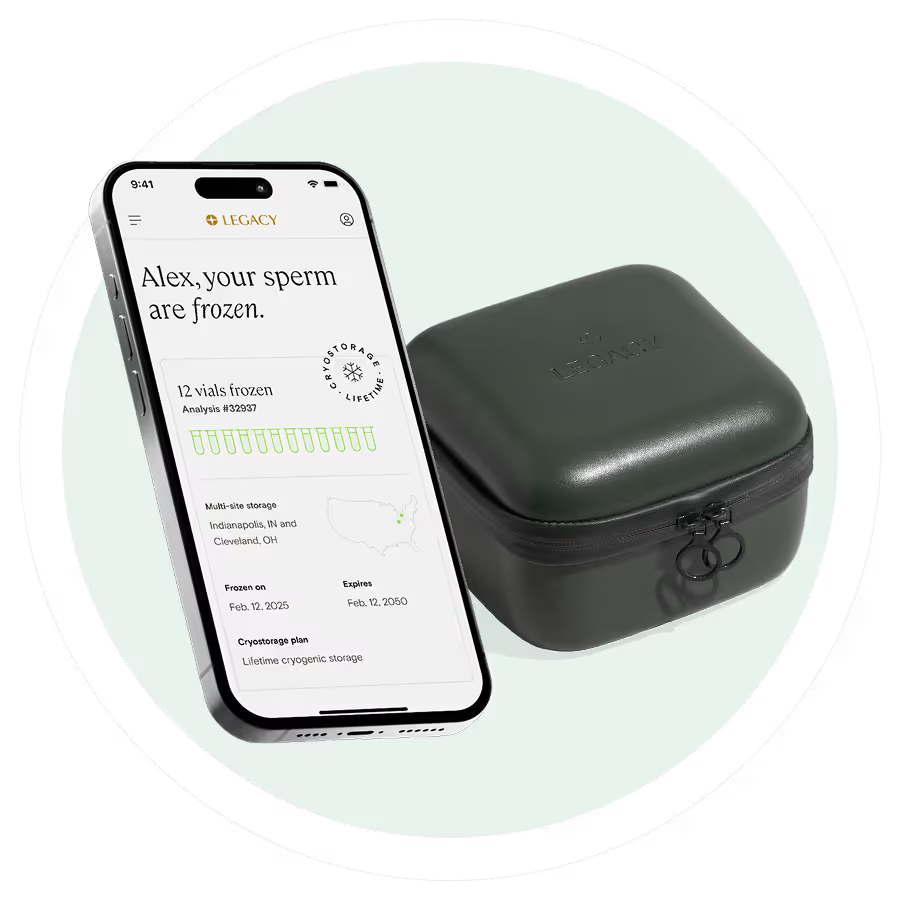
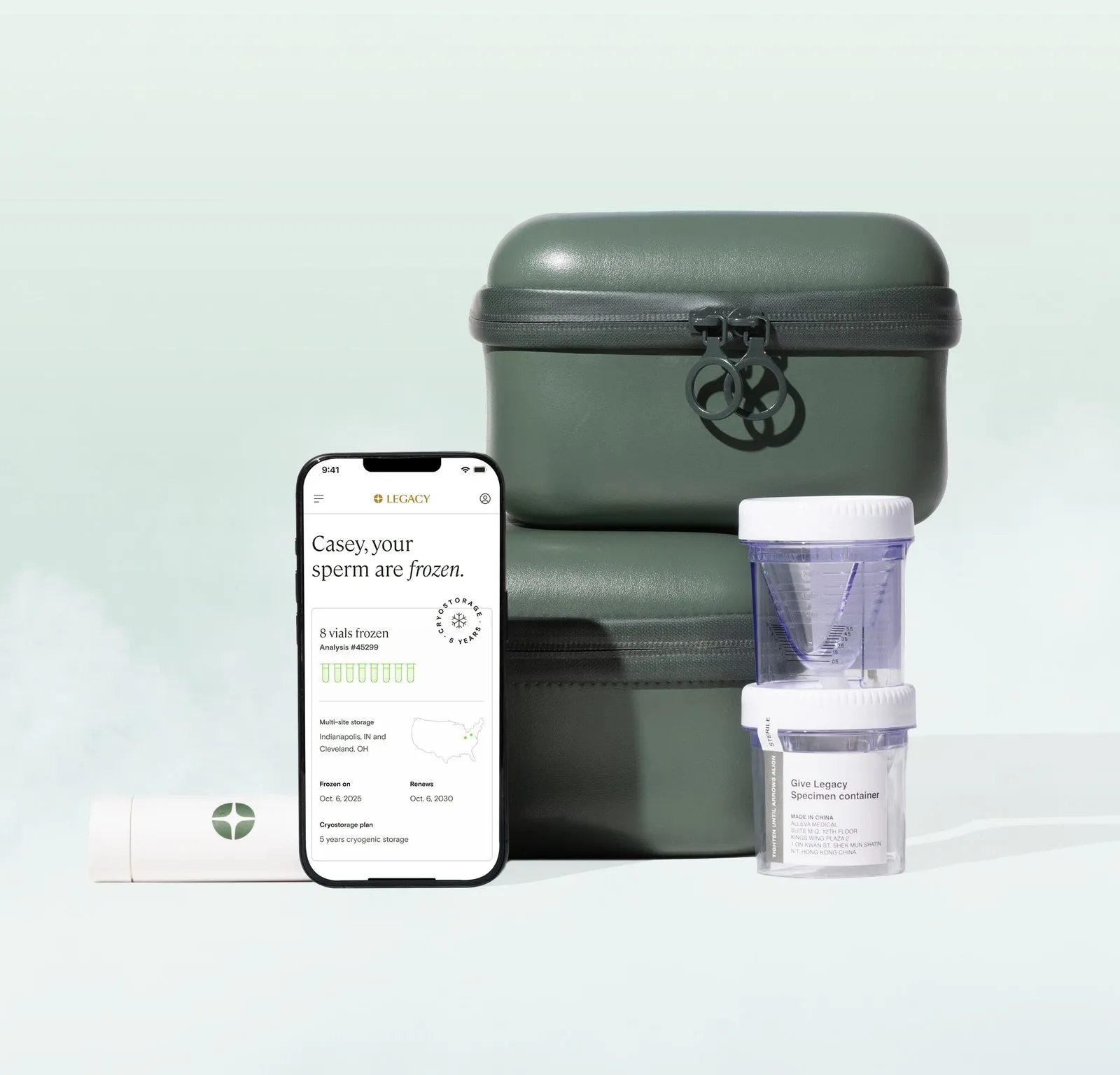
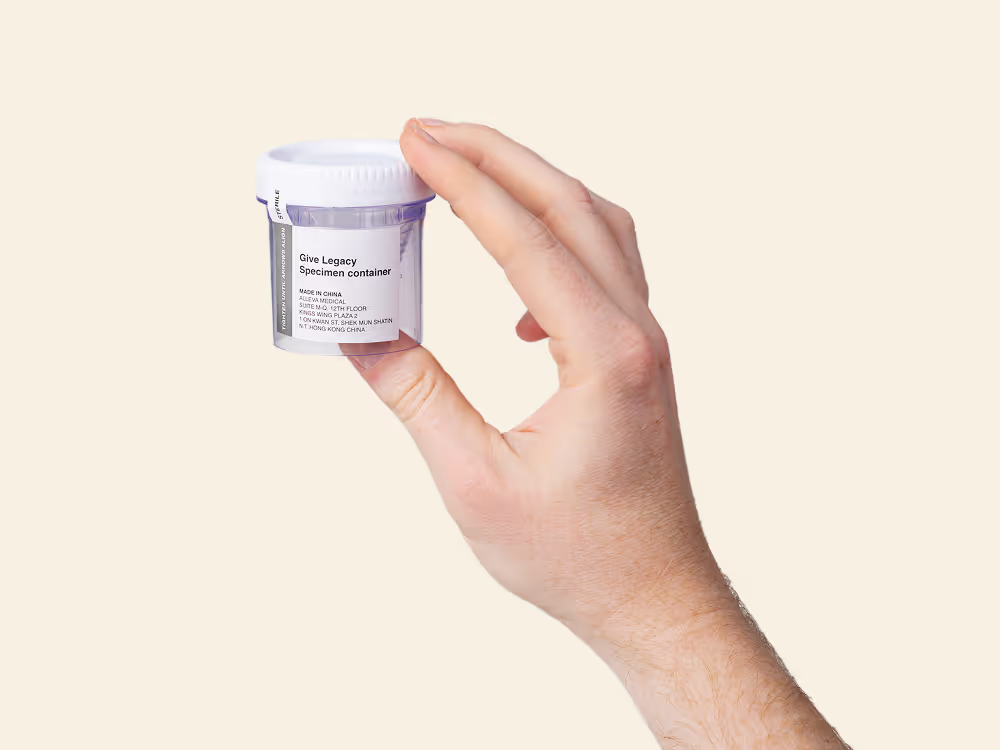
Our state-of-the-art mail-in kit lets you test your semen or even freeze your sperm from the comfort of your couch. No clinic — or awkward collection room — necessary.

Save over 33% compared to clinics
Sperm freezing with Legacy starts at $245 per year, and we’re in network with most major insurance plans and benefits.

Security and privacy at every step
Your kit arrives in discreet packaging, your results are available on a private virtual dashboard, and your sample is stored in multiple locations for redundancy.
“Great customer service. I was in a time crunch because my husband was having surgery. They were so courteous. Assisted me through the whole process, even with my continued calling for additional questions. So grateful for all the help, patience and understanding.”

“My wife and I are pretty sure that we don't want children, but we also don't want to leave it up to chance. We decided I was going to get a vasectomy, but before we did that, we wanted to make sure our legacy was protected. The thought of going into a clinic was very anxiety-inducing, so the fact that I was able to create my samples at home, and get the confirmation that it arrived the next day — it was really easy.”


2024
Best Option for
Sperm Testing & Freezing
How it works
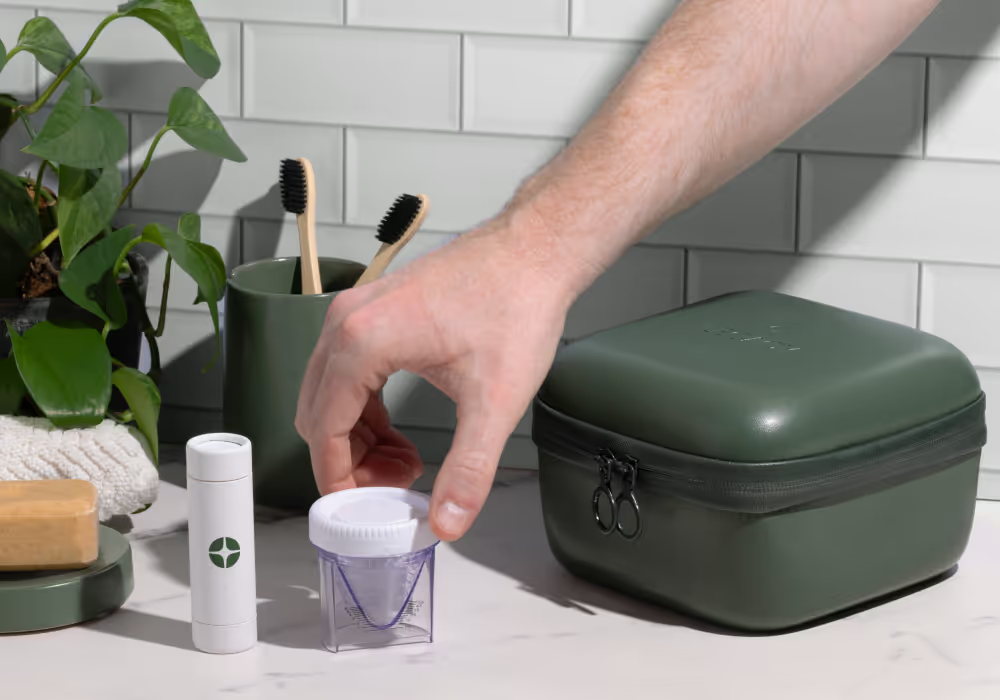
Produce your sample at home. Use the prepaid label to ship it to our full-service andrology lab.
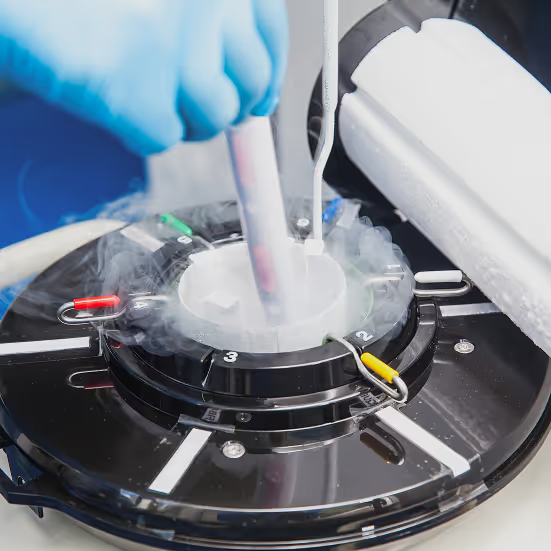
For pre-vasectomy storage, we’ll do a full semen analysis to ensure your sample is viable for freezing. For post-vasectomy analysis, we measure your sperm concentration (how many sperm) — and we double check.

If you’re freezing prior to a vasectomy, your sample will be frozen immediately so you can confidently continue on to your surgery.
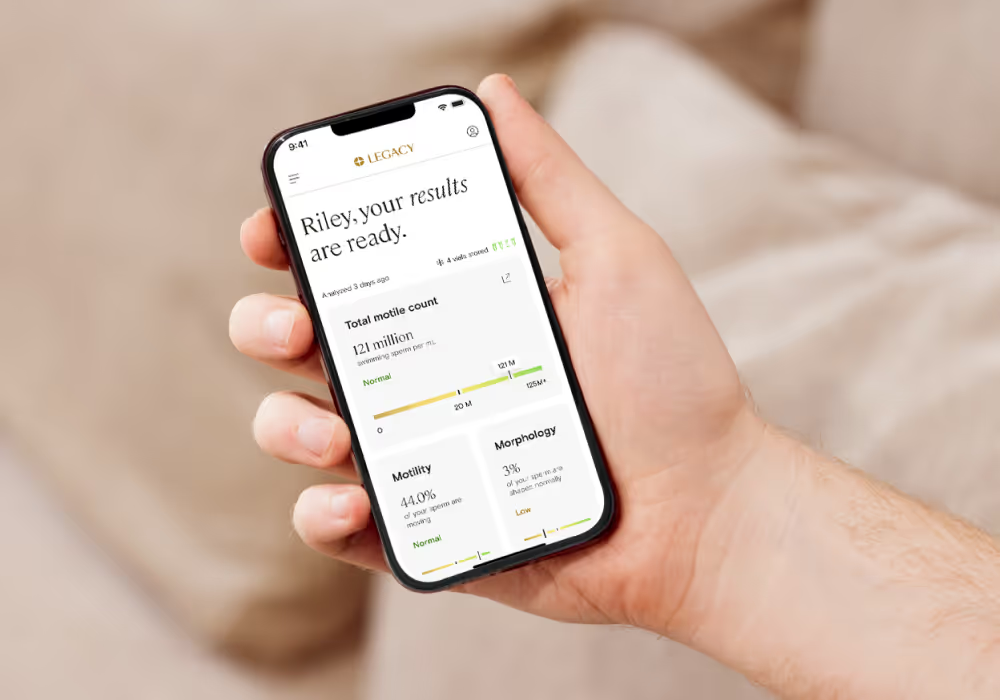
On your digital client dashboard, you’ll see the results of your post-vasectomy analysis, or, if applicable, the details of your storage plan.
You can use frozen sperm for IUI or IVF without a vasectomy reversal or testicular sperm extraction. You can keep your samples in storage for as long as you need without affecting their health or viability.

FSA/HSA eligible
Find what’s right for you
Freezing & testing for wherever you are in your journey

25 years of storage
3 collection kits for 3 samples
Pre-freeze STI test
Advanced Semen Analysis with DNA fragmentation testing
3 years of storage (renewable)
2 collection kits for 2 samples
Pre-freeze STI test
Does not include Advanced Semen Analysis with DNA fragmentation testing
Semen volume
Sperm count & concentration
Motility, if sperm are present
Manual verification of azoospermia
Ways to save
At-home sperm testing or freezing may be covered by your insurance or benefits.

Insurance coverage
Members of eligible insurance plans may be covered for testing and freezing. Legacy is in-network with Aetna, Cigna, Emblem, and UnitedHealthcare, depending on your state.
Military & Veteran benefits
For active-duty and reserves, we’re in-network with TRICARE West. For Veterans, we’re in-network with Optum VA Community Care Network and TriWest, which covers semen analysis and storage at 100% with a referral from your provider.
Fertility benefits
If your or your partner’s employer offers supplementary fertility benefits through Progyny, Carrot, Maven, or WIN Fertility, you can access up to $10,000 in funds for fertility care.