Start hormone therapy now, consider parenthood later.
Easily, securely, and affordably preserve your fertility before gender-affirming care with Legacy’s state-of-the-art at-home sperm collection kit.

Trusted by








What trans women need to know about fertility
If you’re considering gender-affirming hormone therapy (GAHT), it’s important to be proactive about fertility. You may not know what your future family will look like — or even if you want kids — but you can take steps to preserve your options.

GAHT and sperm
GAHT, including estrogen and T-blockers may have a significant, long-term impact on fertility. Research finds that certain hormone regimens may impact fertility after just a few weeks.
For that reason, sperm freezing is best done before or at the very beginning of hormone therapy. If you’ve already started hormone therapy, you can test your sperm to see how it’s been affected.
Your transition, uninterrupted
If you have frozen sperm available, you could have a genetic child in the future without stopping your hormone therapy, even if you’ve taken hormone therapy for years or have bottom surgery.
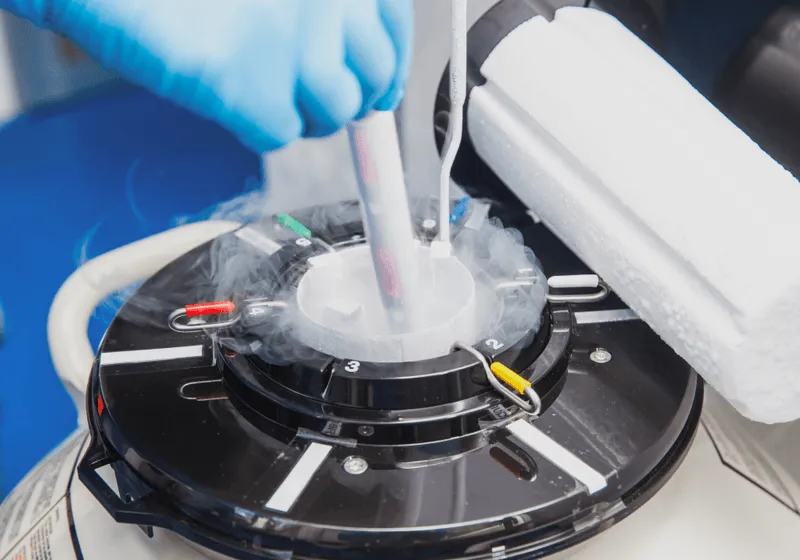
Frozen sperm can be used in IUI (artificial insemination) or IVF later on. Once in storage, sperm remains as healthy and high-quality as it was when you froze it — giving you plenty of flexibility around family-building.
Your inclusive, affirming fertility partner
Legacy has helped over 2,000 trans and gender non-conforming patients preserve their fertility.

Family building for all
Legacy is an inclusive option. We partner with leading transgender health clinics, our clinicians are WPATH members, and our team has been trained in transgender care.

From checkout to lab in less than a week
We’re 10x faster than a traditional clinic. Freeze your sperm without delaying your gender-affirming care — no doctor’s order required.

Save over 33% compared to clinics
You have a lot of other costs to worry about. Here, sperm freezing starts at $245 per year, and we’re in network with most major insurance plans and benefits.

Security and privacy at every step
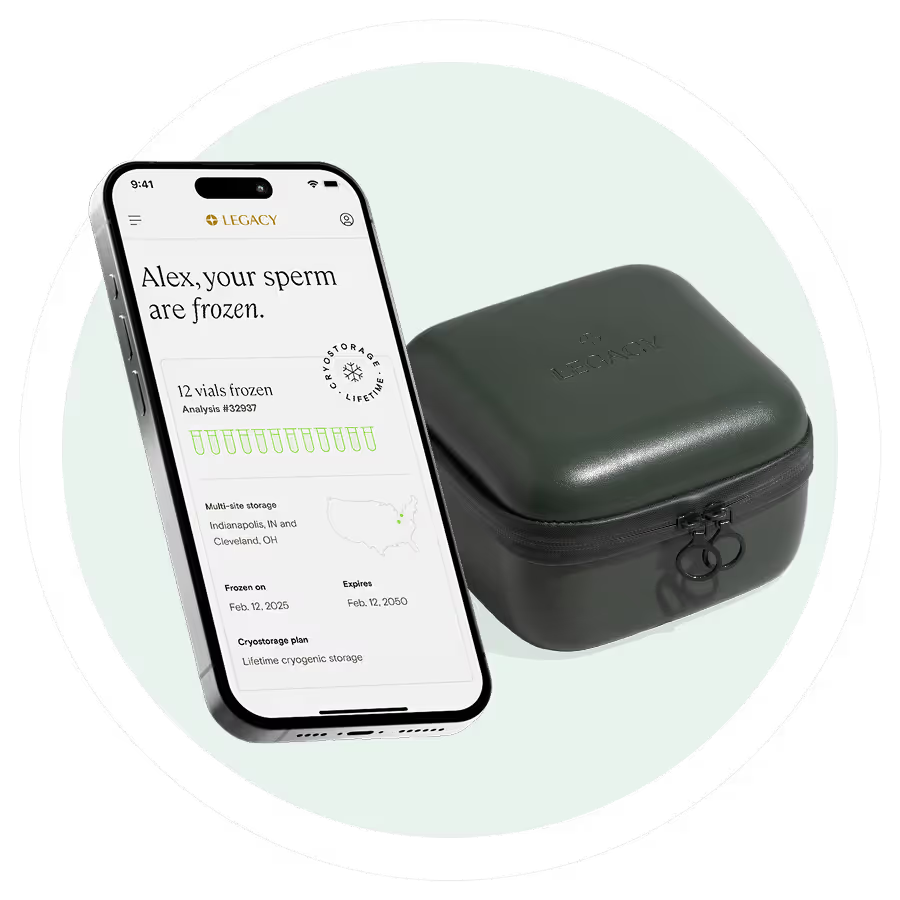
Your kit arrives in discreet packaging, your results are available on a private virtual dashboard, and your sample is stored in multiple locations.
“Do I want kids? I might want them in the future, and this is kind of like insurance. Sperm insurance. Legacy sends you an at-home collection kit, and with that I was able to skip the awkward offices.”
Brenna Jordan
Storing for future family

“I sought out Legacy on really short notice, as I was just about to begin HRT, and I didn't want to take the chance on not being able to have kids in the future. With Legacy, I was able to get my kit in just 2 days, which meant I could start HRT much sooner than if I went with anyone else.”
Aya C.
Beginning HRT

“I've recommended Legacy to all my friends. Being trans and beginning to medically transition/many of us are met with an influx of hurdles. Legacy made it really easy+accessible. Am super glad opted for Legacy and not a random bank/clinic.”
Bay Davis
Beginning HRT




How it works
Order your collection kit online
Produce your sample at home and ship it back overnight with a prepaid label. We’ll analyze your sample to ensure it’s viable for freezing.

Your sample is frozen
Once your sample is stored, you can confidently start or continue your medical treatment, knowing your option to have children is protected.
Using your sperm in the future
The more vials you store, the higher the chance that you’ll be able to create a pregnancy. You can keep your samples in storage for as long as you need without affecting their health or viability.

FSA/HSA eligible
Find what’s right for you
Freezing & testing for wherever you are in your journey

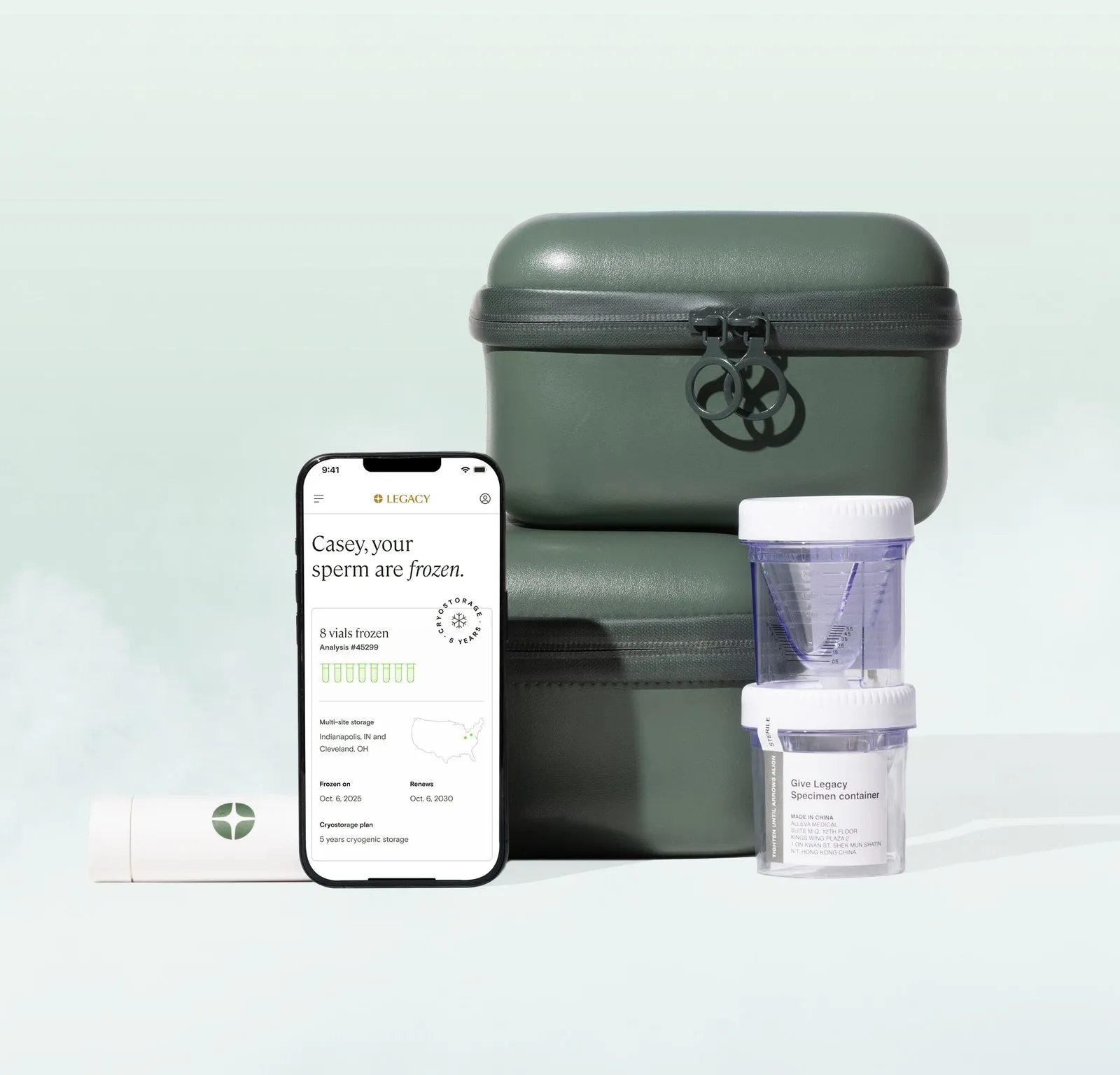

25 years of storage
3 collection kits for 3 samples
Pre-freeze STI test
Advanced Semen Analysis with DNA fragmentation testing
10 years of storage (renewable)
2 collection kits for 2 samples
Pre-freeze STI test
Does not include Advanced Semen Analysis with DNA fragmentation testing
3 years of storage (renewable)
2 collection kits for 2 samples
Pre-freeze STI test
Does not include Advanced Semen Analysis with DNA fragmentation testing