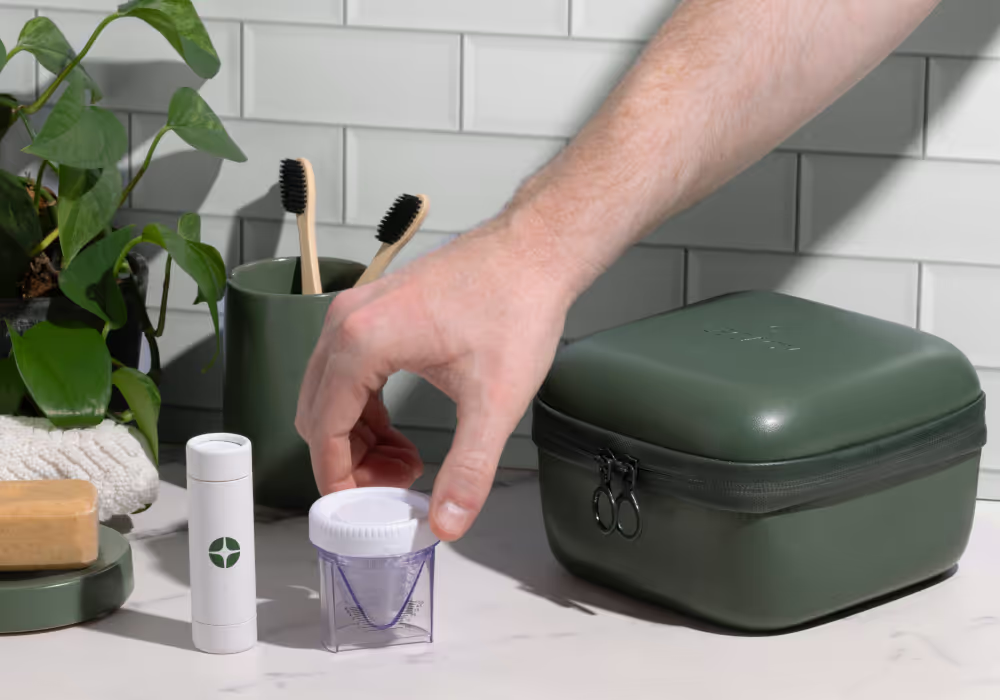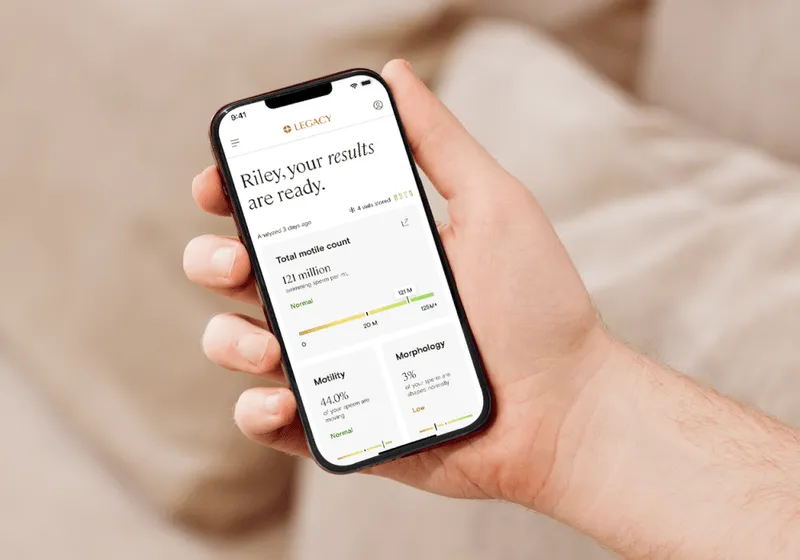


Doctor-trusted semen analysis and storage. With Legacy, your most valuable assets are secured.
I didn’t have to leave home to understand my fertility. The results came back very quickly, more quickly than I thought. You don’t have to sit there waiting and wondering for too long.

I was about to start testosterone replacement therapy, and realized a week before that I should freeze my sperm in case my fertility doesn’t come back.

My sperm health results were actually great. I decided to freeze because I know I want biological kids one day. I’m 33, and want to be sure all my options are open for when that time comes.

Recommended for people trying to have a baby so you have a complete picture of the fertility equation.
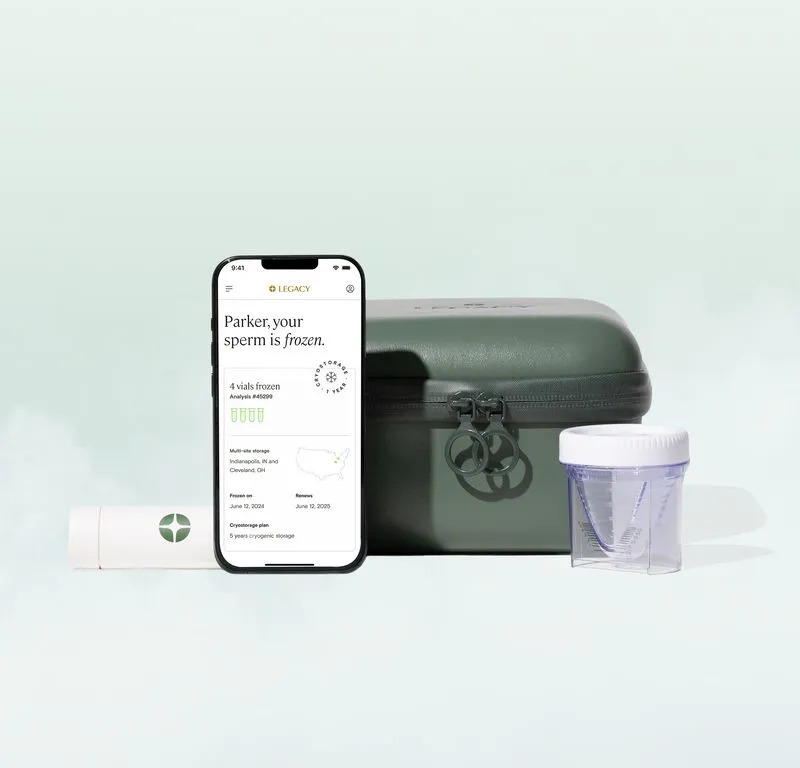
1 year of storage for 1 sample (renewable)
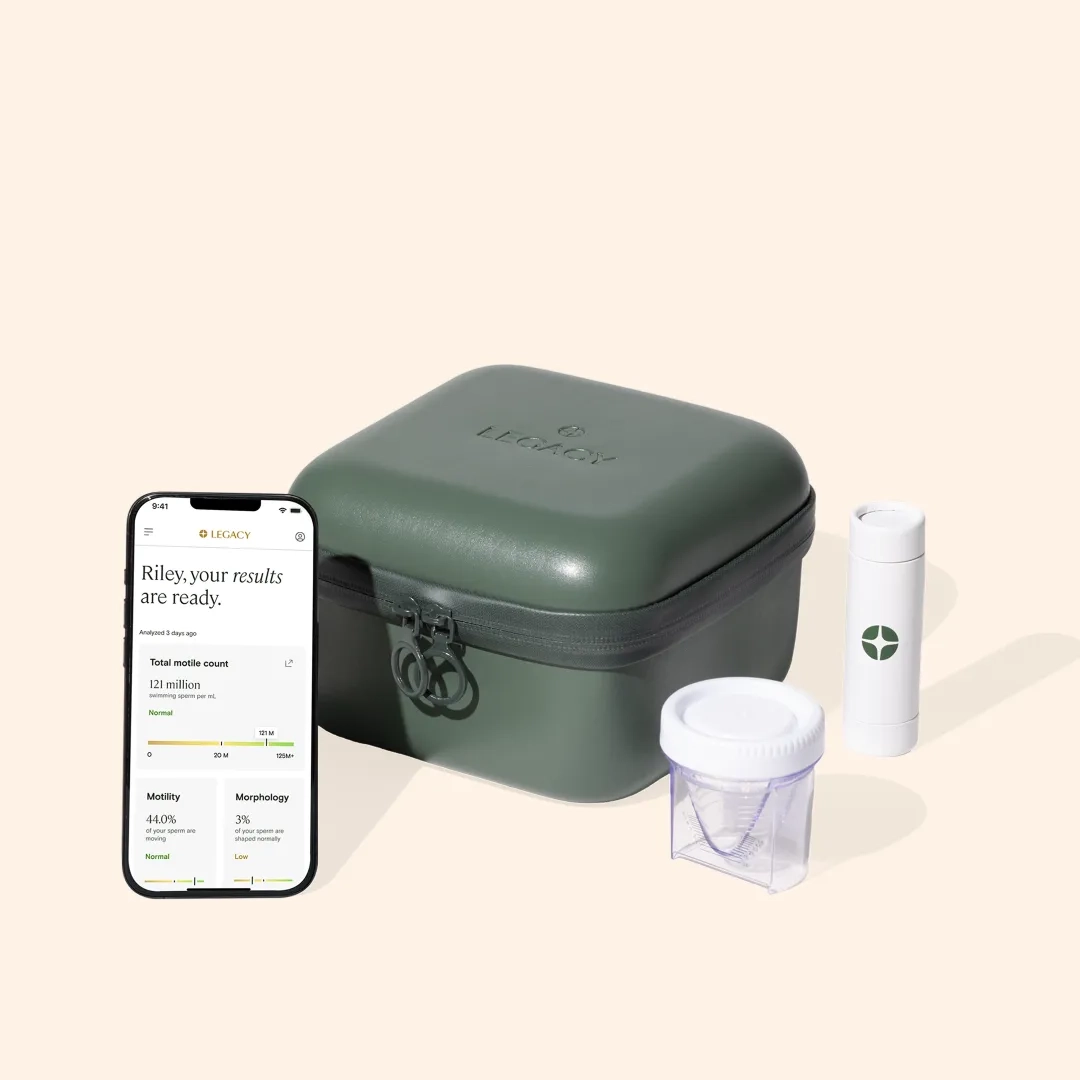
1 collection kit
Pre-freeze STI test
Advanced fertility testing
2 samples, 5 years of sperm freezing (renewable)

5 years of storage (renewable)
2 collection kits for 2 samples
Pre-freeze STI test
Advanced Semen Analysis with DNA fragmentation testing
3 samples, 25 years of sperm freezing

25 years of storage
3 collection kits for 3 samples
Pre-freeze STI test
Advanced Semen Analysis with DNA fragmentation testing
1 year of sperm freezing (renewable)

1 year of storage (renewable)
1 collection kit for 1 sample
Pre-freeze STI kit
Advanced Semen Analysis with DNA fragmentation testing
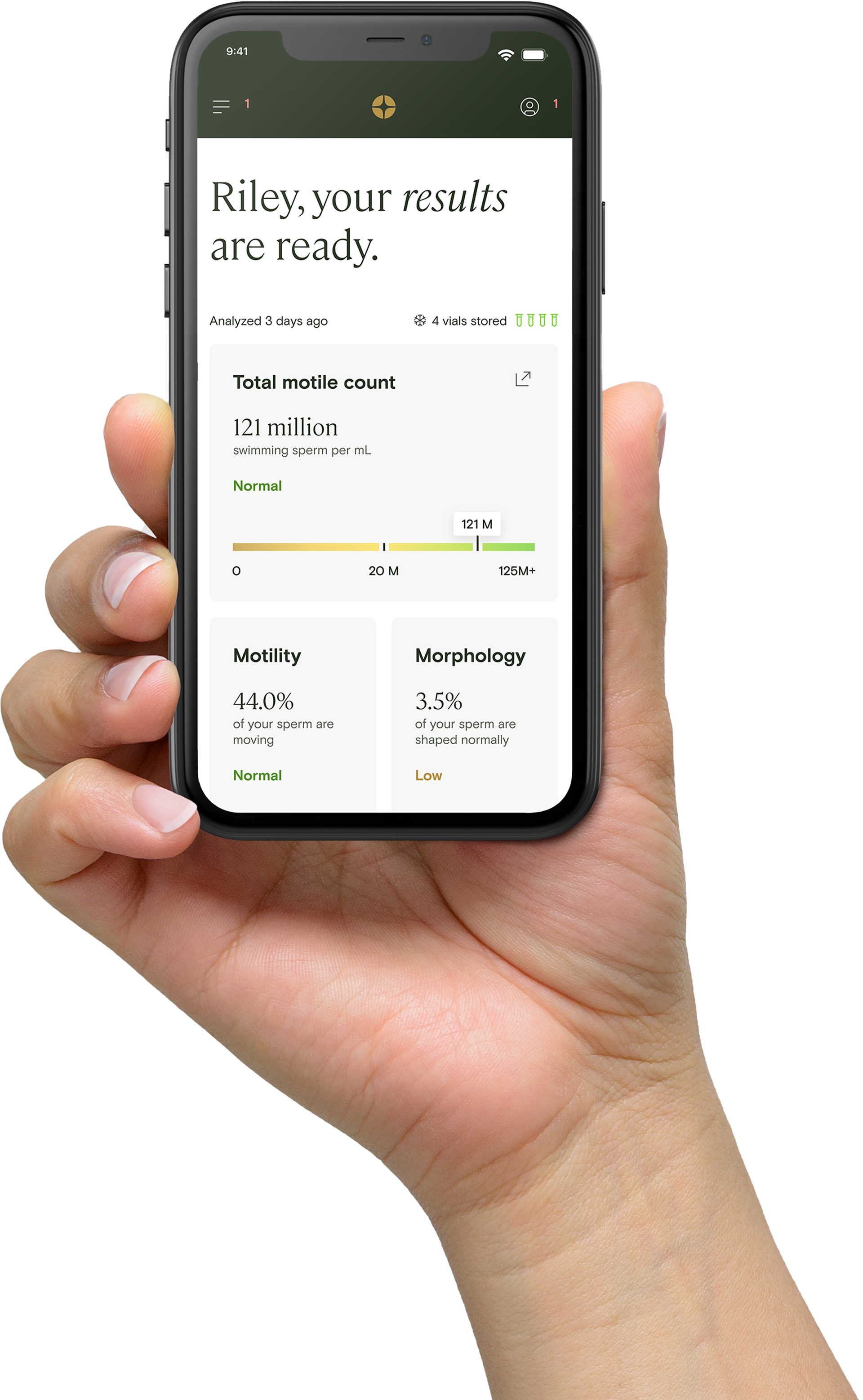
In addition key semen parameters in a Standard Analysis, this testing bundle evaluates DNA fragmentation, a measure of sperm’s genetic health that can help shine a light on infertility, miscarriage, or failed IVF cycles. Includes lifetime access to your Insights dashboard, including your Sperm Score.

Semen volume
Sperm concentration & count
Motility
Morphology
Sperm DNA fragmentation

Test for 6 sexually transmitted infections from the privacy of home. Protect your sexual and fertility health, get prepared for fertility treatments or trying to conceive, and prevent the spread of infection to others.

Chlamydia
Gonorrhea
Hepatitis B
Hepatitis C (antibodies)
HIV 1 and 2
Many people believe that testosterone contributes to fertility, and that testosterone therapy may even improve fertility. However, taking external testosterone can throw off the balance of other reproductive hormones that actually drive sperm production.
As a result, TRT is likely to cause impaired fertility or complete infertility. One study found that 65% of men on TRT become temporarily sterile within 4 months of use.
Possibly. Without getting too technical, hCG mimics the effect of another reproductive hormone, luteinizing hormone (LH). LH is essential to the production of sperm, and LH levels drop significantly for men on TRT. Therefore, taking hCG can help maintain sperm production in those who are taking testosterone. One small study found that hCG helped maintain sperm production for at least a year of TRT.
However, it’s impossible to know how hormone therapy will impact you. Even if you’re taking hCG alongside testosterone, we highly recommend sperm freezing as a back-up plan, especially if you’re certain you want kids in the future.
Legacy is committed to supporting military families through discounts and special programs.
Both active-duty military members and Veterans are eligible for discounts on our products through WeSalute (20% off) and ID.me (10% off).
You can use your frozen sperm in an intrauterine insemination (IUI) or in vitro fertilization (IVF) procedure. Generally speaking, one vial of sperm is used in each IUI or IVF procedure.
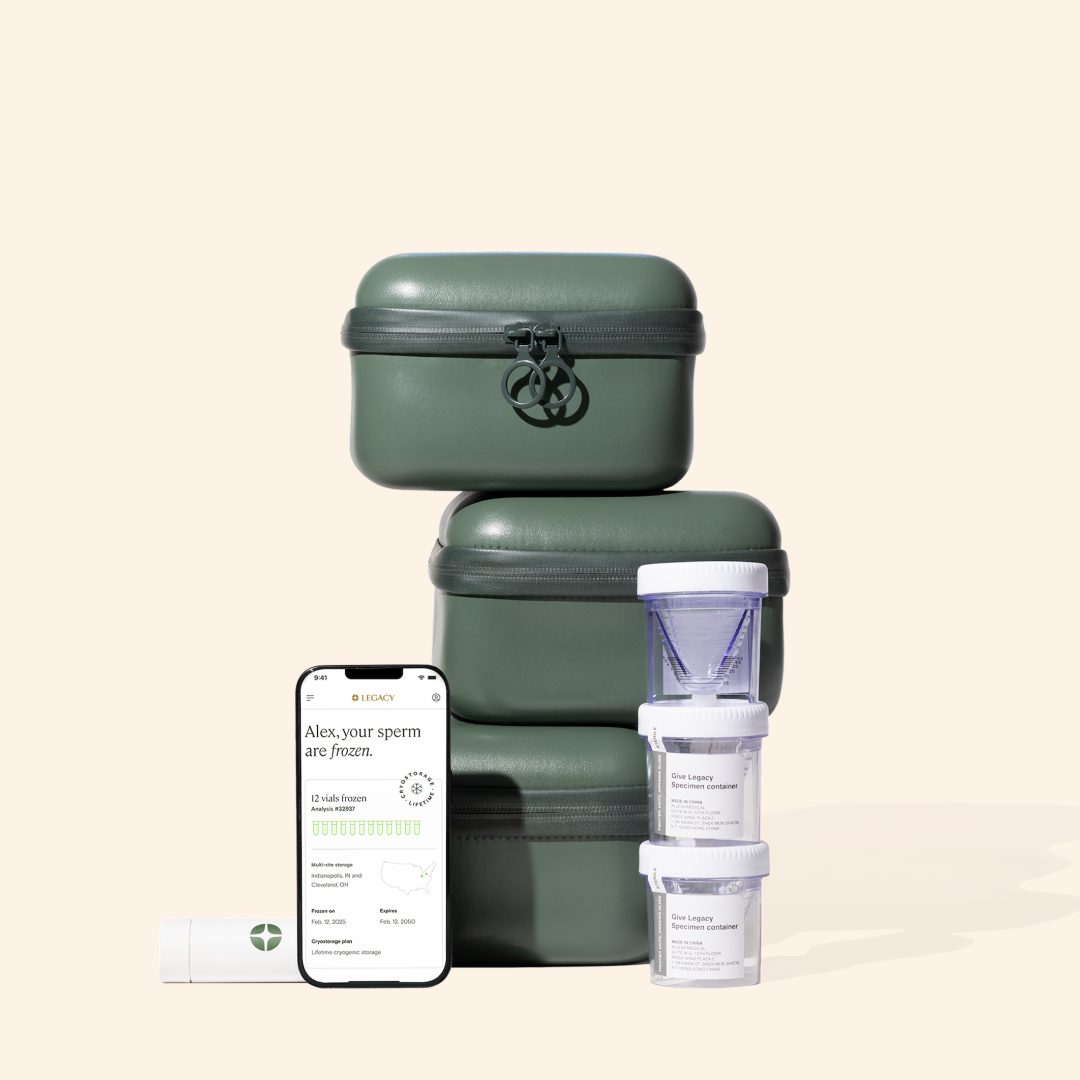
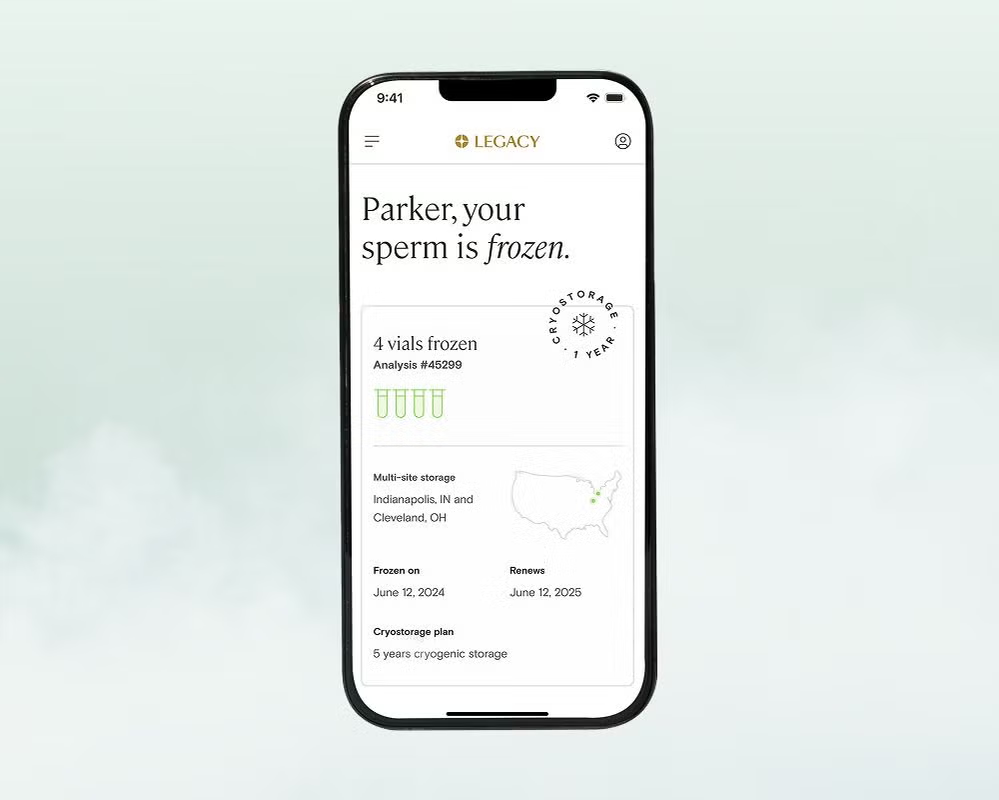
1 semen sample = 4 vials of frozen sperm
1 vial of frozen sperm = 1 IUI or IVF procedure
Short answer: as many as you can afford. But the ideal number of samples to store also depends on your future plans. A few questions you might consider:
Do you have kids already? If you don’t, there may be a higher chance that you’ll want kids in the future, even if you’re sure you don’t want them right now. (Hence the vasectomy!)
How old are you? If you’re in your 20s or 30s, it’s more likely that your family plans may change in the future.
Generally speaking, one vial of sperm is used in each IUI or IVF procedure.
1 semen sample = 4 vials of frozen sperm
1 vial of frozen sperm = 1 IUI or IVF procedure
IUI pregnancy rates range from 10–25% per cycle; IVF success rates range from 5–50% per cycle. So, you may need multiple attempts to achieve pregnancy.
Not necessarily. It takes time for testosterone replacement therapy to affect your fertility. The quantity and quality of sperm may deteriorate progressively the longer you’ve been taking TRT, and you’ll typically see a significant decrease in fertility or complete sterility after about 4 months of TRT.
If you’re already taking testosterone, we recommend starting with a semen analysis. This test will assess the quality of your semen and determine whether your sample is viable for freezing.
If you do a semen analysis with Legacy and have viable sperm, you can upgrade your purchase to include freezing, and freeze that sample immediately.
If you don’t have viable sperm, you can consider pausing your TRT for 3–6 months to see if sperm production resumes before continuing with the fertility preservation process.
Yes. Legacy’s at-home STI screening kit is tested in a CLIA-certified laboratory. Every test performed as part of this kit is nearly 100% specific and sensitive, meaning it has a very low chance of producing false positives or negatives.
An advanced analysis measures:
In addition, our Advanced Semen Analysis includes lifetime access to our Insights dashboard, including your Sperm Score.
If, for whatever reason, your sample isn't viable and isn't able to be stored, we will discard it, contact you, and refund you for the cost of storage.
The transport liquid is an FDA-approved, clinically tested buffer media that extends the life of sperm during shipping. The media contains carbohydrates — nutrition for sperm — plus an antibiotic to reduce bacterial growth and a buffer ingredient to keep pH stable. This allows us to analyze and freeze your sperm after overnight shipping.
The sperm transport liquid is washed off when the sample arrives at the lab, and it will not negatively affect sperm quality. It was pioneered by one of our advisors, Dr. Gail Prins, who published studies on the use of buffer media as a protectant for human spermatozoa as early as the 1980s.